


Chris McOuat
Is buying a Chinese EV a good idea?
Is buying a Chinese EV a good idea?
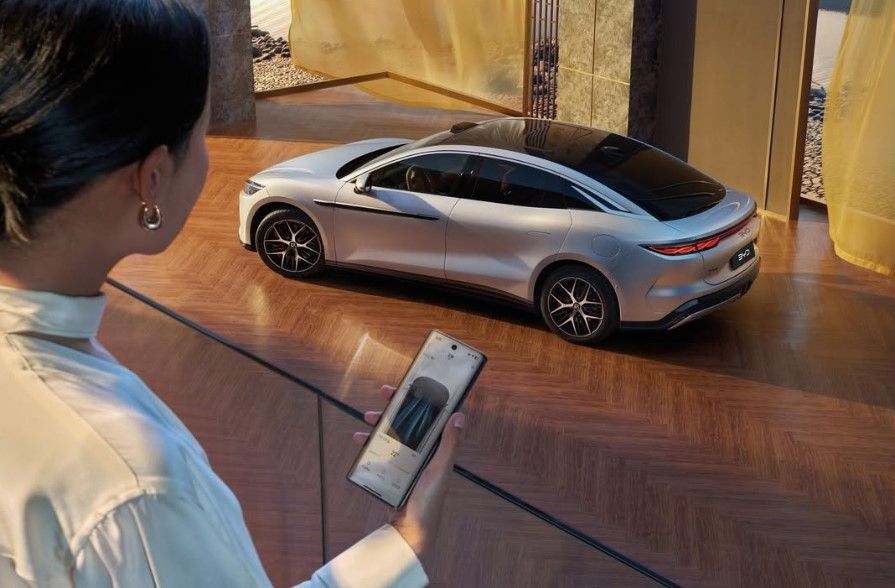
@byd_global, Instagram
The Topline
- This week, Prime Minister Mark Carney announced a new five-year electric vehicle (EV) affordability program that could see consumers reimbursed up to $5,000 on their EV purchase
- The announcement follows last month’s trade deal between Canada and China that will see 49,000 Chinese EVs imported annually at a reduced tariff of 6.1 per cent, down from the current tariff of 100 per cent
- Half the EVs imported from China will be priced below $35,000 in a time when EVs generally start at $50,000 or more
- Carney also announced the elimination of the EV sales mandate that required EVs to make up 100 per cent of sales by 2035
Never miss another side to every story
Sign up for The Level's 5-minute newsletter, 3x per week
Thanks for subscribing!
Check your inbox for an email to confirm you're on the list. If there's no email, check your spam filter just in case, then mark us as 'not spam' so that you never miss an issue.
Switch sides,
back and forth
More competition is never bad
One of the biggest hurdles for those considering the purchase of an EV is the initial purchase price of the vehicle compared to an equivalent gasoline-powered vehicle.
By allowing up to 49,000 Chinese EVs to be sold in Canada annually, and with half of those to cost less than $35,000, it will almost certainly allow more Canadians to switch to an EV.
Throwing in the new EV affordability program is an added bonus, potentially lowering the cost of an EV below $30,000. For argument’s sake, the current cheapest EV available in Canada is the Kia EV4, priced at $39,000.
But what exactly are you getting for your money? If it’s that cheap, it can’t be good, can it?
If you trust reviews from countries that already allow Chinese EVs, the cars are getting a lot of praise. Take Australia, where in just 10 months, the BYD Sealion 7 has become the second-best-selling electric vehicle in the market.
According to one reviewer , “...it’s easy to see why this SUV has set the standard for what drivers looking to make the switch have been waiting for. A tech-filled, comfortable electric SUV.”
But what if you’re not quite ready for a Chinese brand? The reduction in tariffs on Chinese-produced EVs could also reduce prices on models already familiar to Canadian consumers.
EVs from brands like Volvo, Polestar, and Tesla that are manufactured in China could enter the market at more competitive price points than previously possible.
Across the industry, new models will bring technology and features not yet seen in this market, hopefully pushing other automakers to step up their game to win over buyers.
For instance, ever wanted a drone to launch from the roof of your car? Well, this announcement could make that dream a reality.
Bottom line: Sounds like these Chinese EVs aren’t bad at all. And with more affordable EVs on the market and the government chipping in rebates, car buyers are in a good spot.
What could go wrong?
More competition for consumers is never a bad thing, but with any high-ticket item like a vehicle purchase, having an established dealer and supply chain network in place is essential.
While half of the 49,000 Chinese EVs being imported annually will be priced under $35,000, that is still one of the biggest purchases an individual will make in their life, second only to buying a home.
So if something goes wrong with your new EV, you’ll want it resolved quickly.
But without an established dealer network, service centres, and a local supply of parts, you could be hooped if anything breaks. Worst case, you’re stuck without a car for an extended period of time waiting for parts to ship from overseas.
Look at Tesla. Even with retail showrooms and large service centres, customers routinely complain about challenges with service availability and a lack of replacement parts.
On the other hand, longtime manufacturers such as Ford, GM, Kia and Hyundai have well-established dealer networks, with a wide variety of options available for servicing vehicles and assisting customers with issues that may come up.
There’s no guarantee that Chinese manufacturers intend to establish factories or supply chains in Canada long-term, which could leave buyers hanging if they run into reliability issues.
And then there’s always that possibility of Chinese EVs becoming a security risk. These cars are connected to the internet, full of cameras, microphones, and other data-gathering tools. That information is going to be stored somewhere.
While this new deal with China may bring in cheaper options for consumers, it may end up reducing the number of choices available from existing manufacturers who simply can’t compete with China’s labour costs. That’s two steps forward, but one step back.
But if you decide you want one, it’s best to let the early adopters take the plunge. Let someone else deal with the risks of espionage, unpredictable reliability, and depreciation rates. Don’t be the guinea pig.
