


Neil Malik
Is Vancouver's Major League Soccer franchise doomed?
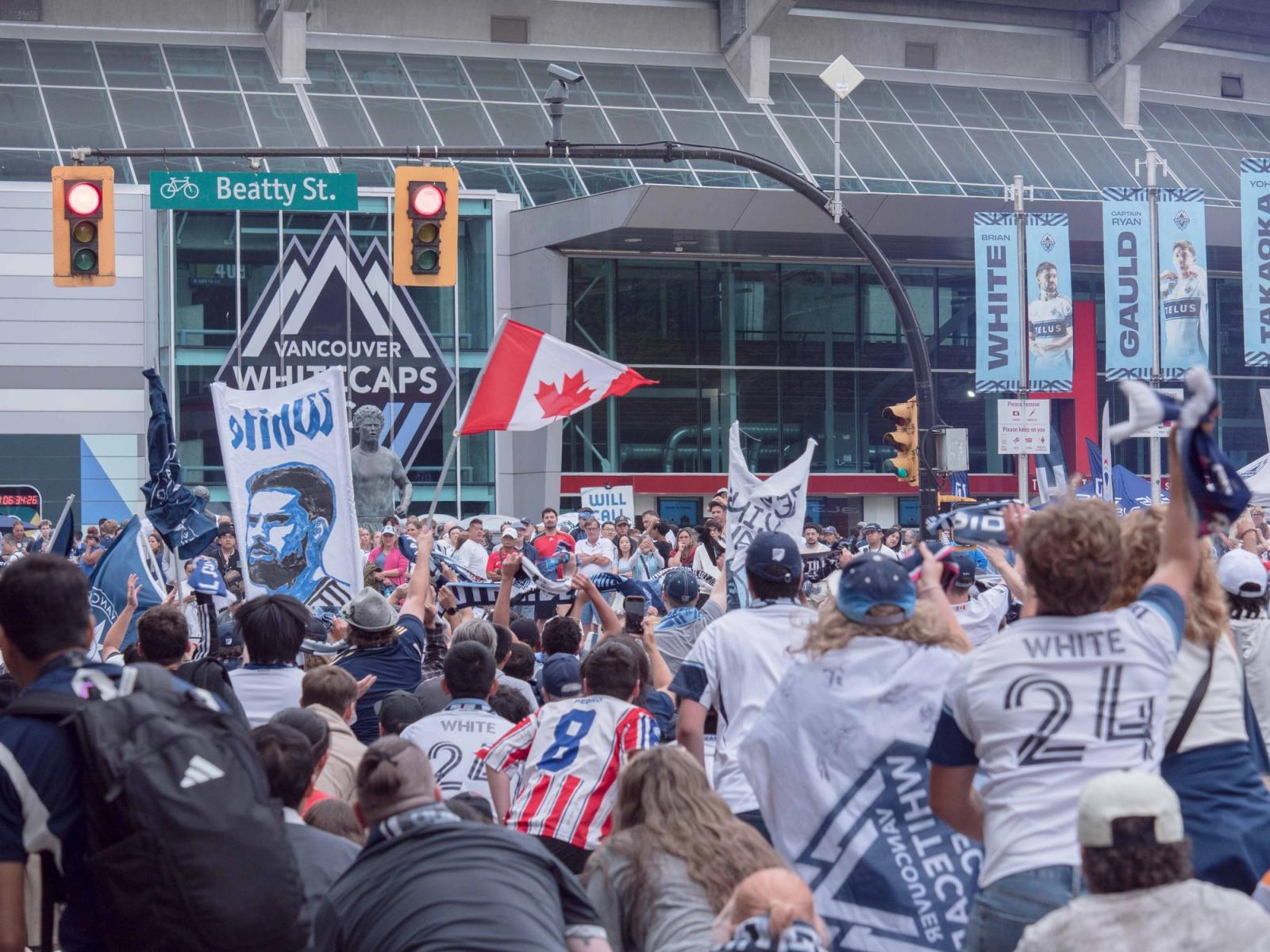
Photo: AlbertArt, Shutterstock
The Topline
- Since entering Major League Soccer (MLS) in 2011, the Vancouver Whitecaps have played their home matches at BC Place in downtown Vancouver.
- In December 2024, the team’s ownership group officially put the team up for sale, opening up the possibility a new owner could relocate the franchise to another city.
- The team’s primary complaint is that its usage agreement with PavCo, the owner and operator of BC Place, deprives them of match day and sponsorship revenue.
- In response, PavCo offered to return its profits to the team so that BC Place would operate on a “net zero” basis, while also providing new opportunities to make money from other areas in the stadium.
- Despite their strong attendance, the Whitecaps say they are at the bottom of MLS in overall revenue, and PavCo’s improved “net zero” proposal still doesn’t close that gap.
Switch sides,
back and forth
There's no way they'll stay
The writing’s on the wall. If a new stadium isn’t on the table, the Whitecaps are history.
Exhibit A: When the team was first put up for sale, they said : “This decision comes after careful consideration of the club’s journey and reflection on what is required to ensure its continued growth and success.”
Translation: “What is required” means their own stadium.
Exhibit B: Last April, when the ownership group announced it was in talks with the City of Vancouver for a new stadium, they said : “The club’s ownership has always been clear on their goal of constructing a purpose-built stadium and the importance of a suitable venue to both fan experience and financial performance for any professional sports franchise.”
Translation: We’ve been saying all along that we need our own stadium to make more money.
Exhibit C: Vancouver Whitecaps FC CEO and sporting director Axel Schuster told The Province on the phone: “Our situation is, unfortunately, not good.”
Translation: The situation is, unfortunately, not good.
Owning a stadium doesn’t just provide more revenue streams. It also avoids the scheduling headaches that come with sharing stadium space.
Each season, the Whitecaps have to steer their schedule around concerts, CFL football, and, in the case of this year, the FIFA World Cup.
The Whitecaps notoriously had to play a “home” playoff game in Portland when their dates conflicted with a motocross show. For a professional sports franchise, that’s hard to swallow.
So it’s clear the team feels a new stadium is a necessity if they are to stay here.
But is someone willing to pay for it? A new stadium usually requires some taxpayer money to support it. The provincial government’s financial situation, however, is bleak .
A new stadium in Vancouver isn’t completely impossible, but it’s still very much a long shot, even after signing the MOU with the City of Vancouver.
Meanwhile, the owners are conveniently selling at a time when several other cities are competing for their own MLS franchise.
Forbes has pegged the value of the Whitecaps in the mid-$400-million range, while new expansion clubs are paying around $500 million in fees alone . So it’s much cheaper for a buyer to try to move a team than start a brand-new one. It’s a seller’s market.
Sources told The Athletic that Greg Kerfoot and Steve Luczo, two of the four existing owners, are focusing on estate and family planning, which led to their decision to explore a sale.
They are getting older and thinking about their estates, so they want nothing more than to cash out a large profit. This team’s getting sold one way or another.
It’s only a question of where the new stadium will be.
Since it’s very unlikely to be in Vancouver, the Whitecaps’ days are numbered.
There’s no way they’ll leave
While things may look dire at the moment, the team has been consistent in its messaging all along. If they can help it, they aren’t going anywhere.
In his response to the latest offer from PavCo, Vancouver Whitecaps FC CEO and sporting director Axel Schuster said: “We are committed to working collaboratively to identify solutions that ensure the long-term home of Whitecaps FC in Vancouver.”
When you dig a bit further, he may be telling the truth.
For one, there’s still no buyer , even after a year on the market. That isn’t for lack of interest. Schuster says dozens of groups have looked, but no one is willing to buy into the current setup, which includes the BC Place stadium arrangement.
If this were purely a relocation play with a clear path out of BC Place, you’d expect at least one relocation-minded group to have pushed harder by now, given how many cities are angling for an MLS team.
The league also has an incentive to expand rather than relocate a team. When MLS initiates a new team in a new city (versus moving an existing team), it receives hundreds of millions in expansion fees from the new team’s owner.
Take a look at the most recent expansion team, San Diego FC. They paid an MLS-record $500 million in expansion fees in 2023. So you can bet the league expects the next fee will be at least that, if not more.
That matters because if a new owner buys the Whitecaps and relocates them instead, the league misses out on a financial windfall.
Lastly, there’s a provincial government that wants to keep the team here. BC Place is owned and operated by PavCo, which happens to be a provincial Crown corporation, meaning the stadium is essentially owned by taxpayers.
If the team ends up moving because of an unfavourable contract with PavCo, that’s a PR problem for a government that’s already feeling pressure from voters on all sorts of issues. To avoid public backlash, politicians must show they did everything they possibly could to convince the team to stay put.
PavCo’s latest offer of more money back to the team is a good start, but it’s just that: a start. It’s likely they’ll further sweeten the deal.
The City of Vancouver also wants the team to stay, especially with this being an election year.
That’s why Vancouver Mayor Ken Sim signed a Memorandum of Understanding (MOU) with the team to allow for negotiations to lease city-owned land at Hastings Racecourse Park on the PNE grounds to the Whitecaps. In return, the team would finance and build its own stadium.
If the Whitecaps had no interest in seeking a buyer who is committed to keeping the team in Vancouver, they never would have signed that MOU. There’d literally be no point.
This doesn’t look like a franchise ready to pack its bags. It looks like an ownership group negotiating its leverage, exploring long-term options, and doing exactly what pro sports teams do.
