


Stephen Smysnuik
Was Eby’s snap election a smart gamble?
Was Eby’s snap election a smart gamble?
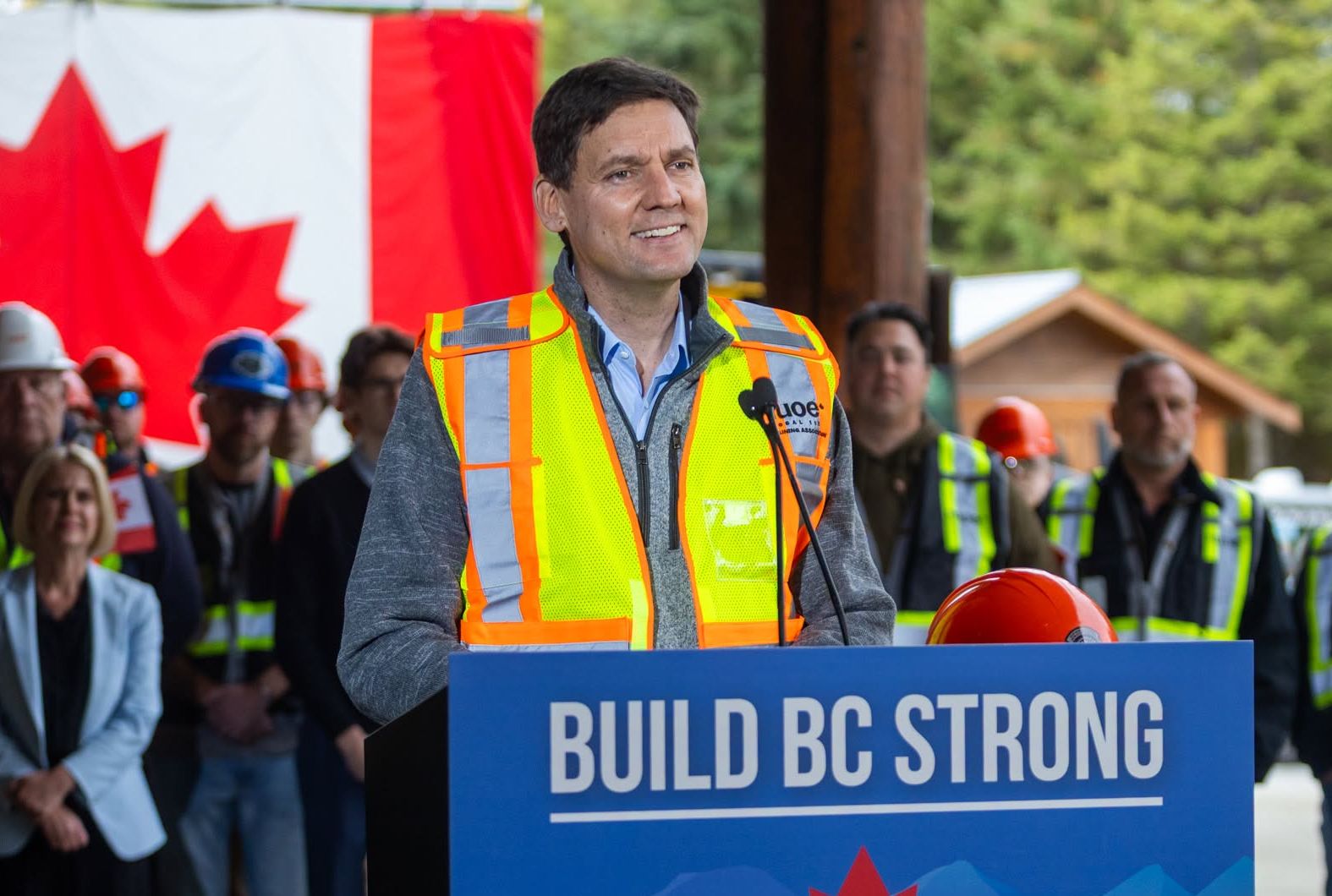
Image: David Eby, Facebook
The Topline
- B.C. Premier David Eby called a snap election for Oct. 24 — two years ahead of schedule — initially citing an "existential threat" from U.S. President Donald Trump as his main justification.
- The election call happened while the opposition Conservative Party of B.C. was in disarray following several Members of the Legislative Assembly (MLAs) leaving the party and the resignation of party leader Kerry-Lynne Findlay.
- Following Eby’s election call, seven of those eight MLAs rejoined the Conservatives to run again for the party, alongside Lorne Doerkson as the new interim party leader.
- The latest Oct. 5 poll from Angus Reid shows the B.C. Conservatives five points ahead of the B.C. NDP nearly two weeks into the campaign.
Never miss another side to every story
Sign up for The Level's 5-minute newsletter, 3x per week
Thanks for subscribing!
Check your inbox for an email to confirm you're on the list. If there's no email, check your spam filter just in case, then mark us as 'not spam' so that you never miss an issue.
Switch sides,
back and forth
Any politician would have done the same
Peel away all the outrage and take this election for what it is — a cynical yet entirely rational political calculation.
Eby's chief opponent, Kerry-Lynne Findlay, had just resigned following a period of party infighting that saw 14 Conservative MLAs leave or reportedly be fired from the party caucus over five weeks.
There was leaked audio apparently talking about “stealing everything” when it comes to party donations. Findlay even caught the attention of the RCMP by allegedly offering a job to a sitting MLA if she stepped down. The Conservatives were a hot mess .
The upstart centre-right party, CentreBC, scooped up eight of their MLAs. By every normal read of B.C. politics, Eby was looking at a fractured opposition heading into an election.
Openings like this don’t come around very often. When your opponent is in disarray, you move. That’s politics.
Waiting two more years would have risked letting CentreBC coalesce into a formidable opponent, or allowed the Conservatives to regroup and come back even more unified than they are right now.
Eby's own team clearly expected this to be a victory lap, with a campaign built around Conservative chaos and MAGA-style extremism rather than the NDP's own record, which, after nine years in power, isn't the easiest thing to run on.
There's also a legitimate, non-cynical case to be made.
Eby initially framed the election around Trump, comparing the president to a wildfire that needs a "firebreak," and arguing that the province needs a stronger majority to withstand sustained American economic pressure.
And it’s true that Trump's tariffs and rhetoric toward Canada have been a real, ongoing feature of this complicated year. Asking voters for a clear mandate to respond to that threat is a defensible reason to go to the polls.
It's also worth remembering that snap elections called from a position of strength are a completely normal, broadly accepted tool in parliamentary systems. Canadians generally treat them as legitimate in ways that, say, Americans won’t.
Doug Ford called Ontario's 2025 election 16 months early using nearly identical language to Eby’s, asking for a mandate to fight Trump's tariffs. He won a historic third majority.
Eby’s predecessor John Horgan pulled the same move in 2020, mid-pandemic, and was similarly rewarded.
Granted, not every premier who's tried this has won. Alberta's Jim Prentice gambled in 2015 and lost badly. Justin Trudeau called an early election in 2021 after winning a minority just two years earlier — and basically ended up with the same minority.
But the tool itself doesn’t mean there was some kind of unprecedented breach of democratic norms here. It's a known, if risky, part of the game.
It's easy to call this reckless from the outside.
It's much harder to name a single politician, of any party, anywhere, who would have looked at a janky, scandal-ridden opposition and chosen to wait two more years instead.
Eby misjudged the room, and the moment
The theory was sound. The execution wasn't. And that's exactly the problem with a decision this consequential.
Let’s start with the voters. An Angus Reid poll taken immediately after the call found nearly two-thirds of British Columbians thought it was “too soon” for an election.
Crucially, 52 per cent of B.C. NDP voters themselves said it was "too soon" for an election (71 per cent of Conservative voters felt the same way), and 51 per cent of past NDP voters agreed Eby was "putting his own interests ahead of the province" in making the call.
A separate Innovative Research poll found one in five British Columbians were open to voting NDP but said they were less likely to because of the snap election call. Eby’s personal favourables dropped seven points in the same stretch.
Katrina Chen, a former NDP cabinet minister who served on Eby's own 2022 leadership team, publicly called the decision "risky," saying Eby still has "a lot of work to do" to convince voters his government puts people first. It’s a notably pointed critique from inside his own camp.
Worse, the "divided opposition" Eby was banking on evaporated almost immediately. Within days of Findlay's resignation, seven of the eight MLAs who'd defected to CentreBC scurried back to the Conservatives, consolidating the right instead of fragmenting it.
New interim leader Lorne Doerkson has become a more challenging target than the NDP expected. Instead of offering a swath of reckless tax cuts that Eby could pit the NDP against, he promised a "no new taxes" pledge alongside removing the provincial sales tax on Canadian liquor to help out an industry being hammered by a U.S. ban on imports.
Then there's the matter of timing. B.C.'s municipal elections — genuinely consequential and low-turnout races that struggle for turnout even in normal years — fall exactly one week before Eby's provincial vote.
Richmond is choosing its first new mayor in 25 years. Vancouver has a real, competitive mayoral race. Voters across the province are trying to decide who runs their cities, but now with a provincial contest taking up all the air in the room.
Political analyst Greg Millard told CTV that he believes the call "violates any sense of fair play in the parliamentary system."
Eby didn’t care. He bet on the opposition staying weak and divided, forever branded with Findlay’s far-right views. That didn't pan out.
What's left is a premier who called an unpopular, unnecessary election, buried two weeks of municipal campaigning under it, and is now locked in a race against the very opposition he assumed would hand him an easy win.
Do you support journalism that helps Canadians navigate difficult issues with more context and less outrage?
Every dollar goes toward helping Canadians see another side to every story so they can form their own opinion.
