


Neil Malik
The battle for NATO’s new bank HQ, part 1
The battle for NATO’s new bank HQ, part 1
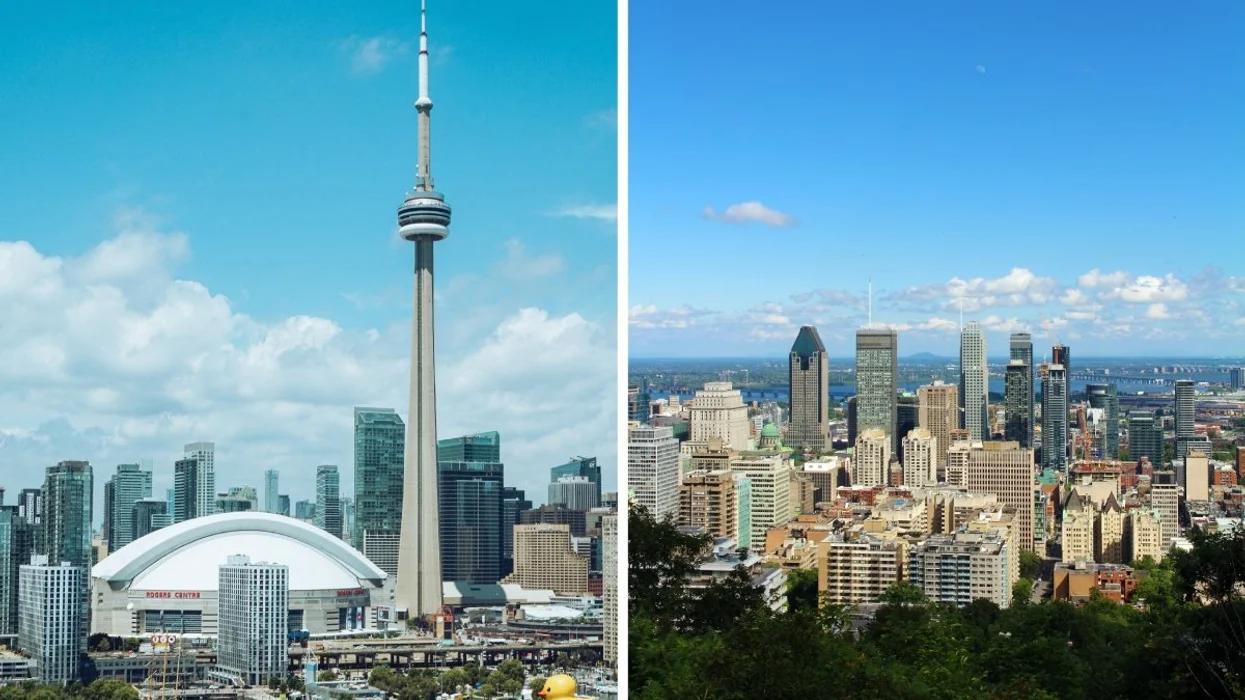
Image: Maarten van den Heuvel, Unsplash, Michael Beener, Unsplash
The Topline
- Canada was chosen over 40 other countries as the future location for the new Defence, Security and Resilience Bank (DSRB)
- The DSRB will be an international financial institution that loans money to NATO countries needing financing to boost their defence capabilities
- For example, if a NATO country needs a multibillion-dollar loan to purchase new fighter jets, it could borrow from the DSRB at a lower interest rate than other lenders
- The federal government will decide the Canadian city for the bank’s headquarters, with plans for it to open before the end of this year
- Vancouver, Toronto, Montreal and Ottawa-Gatineau are actively campaigning to be the home of the DSRB and its 3,500 jobs
Part 1 highlights Toronto and Montreal’s case to be the DSRB’s home city. In part 2 , we’ll profile Ottawa and Vancouver, the two other cities that have submitted bids.
Never miss another side to every story
Sign up for The Level's 5-minute newsletter, 3x per week
Thanks for subscribing!
Check your inbox for an email to confirm you're on the list. If there's no email, check your spam filter just in case, then mark us as 'not spam' so that you never miss an issue.
Switch sides,
back and forth
Canada’s version of Geneva
Montreal isn’t just another city. It was built for international organizations like the DSRB.
Montreal is home to six United Nations offices, including the International Civil Aviation Organization and NATO’s Climate Change and Security Centre of Excellence. It’s the third-largest hub for international organizations in the Americas.
This brings up a good question: Why have so many international organizations chosen Montreal as their Canadian location?
It might have something to do with Quebec’s Hospitality Policy for International Organizations — the only one of its kind in North America.
In short, this policy gives international organizations that sign an agreement with the government preferential treatment, including tax incentives, relocation support and other employee benefits.
And once they arrive, their employees enjoy a lower cost of living than in most major cities in North America, Western Europe, China and Japan. Montreal has a 33-per-cent cost advantage over comparable international cities worldwide, including labour, property and utility costs.
Compared to Toronto, Montreal’s talent pool can go toe-to-toe. Canada’s second-largest city by population also boasts 15 universities and post-secondary institutions.
Last year, Montréal-Trudeau International Airport serviced 92 international and 35 U.S. destinations. Depending on the time of year, Montréal-Trudeau offers non-stop flights to 13 NATO member countries. New York and Washington, D.C., are less than two hours away.
From 2015 to 2021, 46 per cent of federal aerospace and defence contracts were awarded to Quebec-based companies, putting Montreal among the world’s top three aerospace hubs.
So if the DSRB is helping countries boost their defence capabilities, it’s possible some of that defence spending might stay in Quebec. Having the bank nearby isn’t a bad idea.
Perhaps the most impressive part of Montreal’s bid is a clear commitment from the existing business community to support the DSRB in different ways.
Some of Montreal’s defence and finance companies have promised to loan employees to the DSRB through secondments to help get it started. Local accounting and law firms are also offering “advantageous” rates to help with ramping up.
And while other cities made similar comments about helping with scaling, they weren’t emphasized nearly as much in their respective pitches, suggesting Montreal is leaning hard into community support as a way of sealing the deal.
Canada’s version of Wall Street
Toronto isn’t aspiring to become Canada’s financial capital. It already is.
Four of Canada’s five major banks have office towers at the intersection of Bay and King streets, with the fifth just a block south.
Bay Street is basically Canada’s version of Wall Street in New York. If the name of one of your streets is shorthand for describing Canada’s banks, investment firms and the Toronto Stock Exchange, that kinda says it all.
According to Toronto’s pitch deck, more than 40 foreign banks have offices established in Toronto, including nine of the world’s 15 largest banks by total assets. The TMX Group is the third-largest stock exchange operator in North America, behind only NYSE and Nasdaq.
Which means to say: if the DSRB is looking for a city with a community of like-minded peers, Toronto is hard to beat.
As of July 2022, there were about 6.4 million people living in the Toronto region, making Toronto Canada’s largest city by population. While that makes for bad traffic, it’s good for employers.
Toronto’s pitch deck claims the city houses Canada’s largest combined workforce in the financial services, technology and advanced STEM fields — perfect if you’re an international bank that employs more than 3,000 people.
There are six global research institutions within a three-hour drive, including the University of Toronto, Toronto Metropolitan University, McMaster University, Queen’s University, Western University and the University of Waterloo. They produce more graduates in business management and finance than Montreal, Vancouver or Ottawa.
And if DSRB employees need to fly somewhere, Toronto Pearson is Canada’s busiest airport, serving more than 200 locations globally as of 2025. Depending on the time of year, travellers can fly non-stop to 19 of NATO’s 32 member countries.
As an international organization, if the DSRB desires diversity in its hometown, nearly half of Toronto’s population is foreign-born and more than 190 languages are spoken.
Toronto is home to 107 consular missions, more than any other Canadian city aside from Ottawa. With many of these consulates representing NATO members, that could also prove advantageous to the bank’s operations.
While an exact address within Toronto wasn’t mentioned, the province says it will support the bank in finding office space to accommodate its initial staff and work with partners to secure a permanent home in the city’s financial district.
Part 1 highlights Toronto and Montreal’s case to be the DSRB’s home city. In part 2 , we’ll profile Ottawa and Vancouver, the two other cities that have submitted bids.
