


Neil Malik
Canada’s LNG: Is it right to call it clean?
Canada’s LNG: Is it right to call it clean?
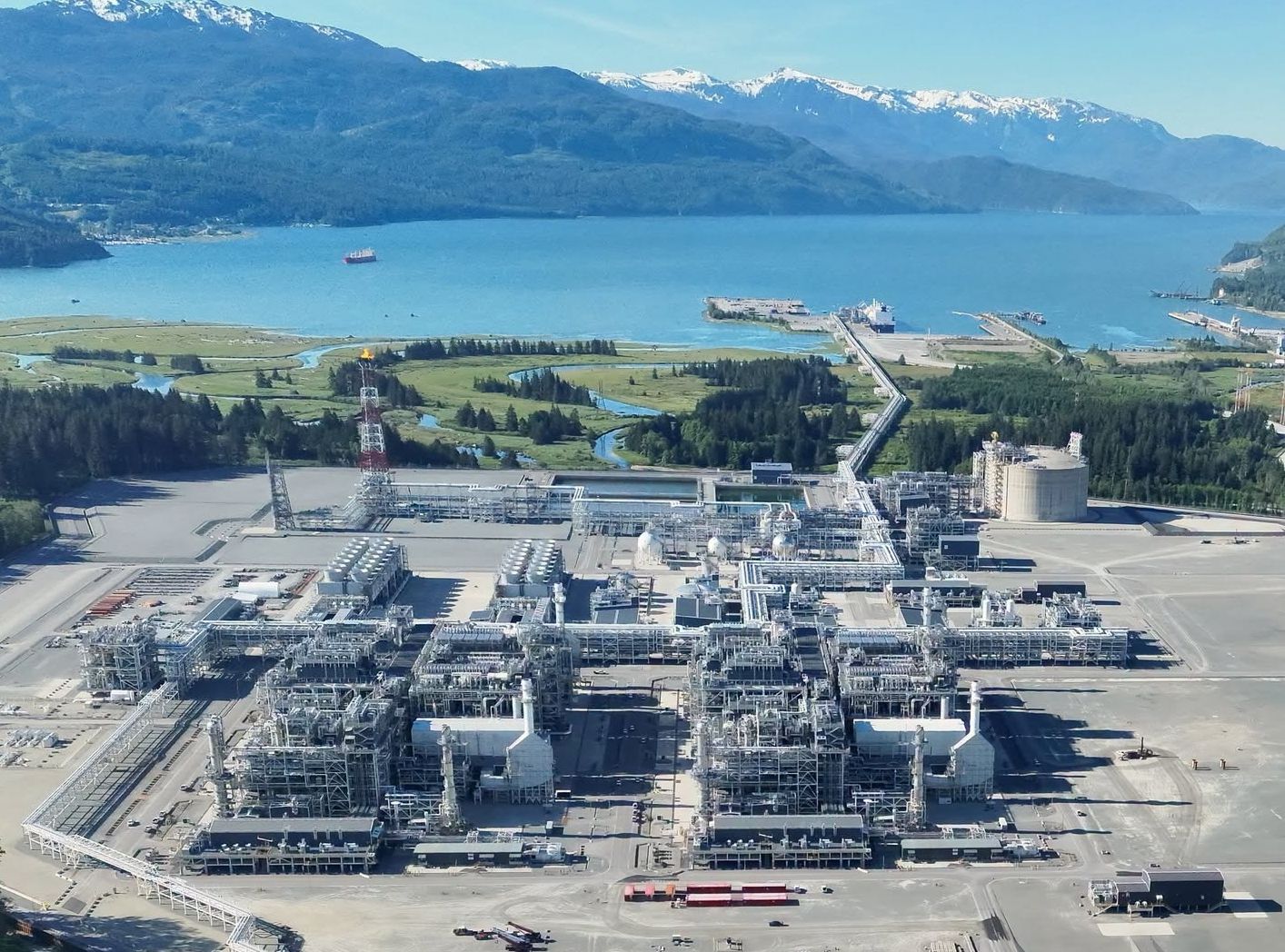
Image: LNG Canada
The Topline
- The federal government promotes Canada’s liquefied natural gas (LNG) as “clean” and “lower-carbon,” while other announcements describe Canadian LNG as “low-carbon” and “low-emission” — all different ways of emphasizing its relatively smaller carbon footprint compared with other fossil fuels.
- In its 2024 budget, the B.C. government called the Cedar LNG project one of the “cleanest” facilities in the world — applying the “clean” label to fossil fuel production.
- Prime Minister Mark Carney recently announced a partnership with B.C. to “unlock Canada’s full potential as an energy superpower,” but also acknowledged in a separate video address that “emissions will be higher in the next few years than they were projected to be under the previous government’s plan.”
- The non-partisan think tank Public Policy Forum argues in a 2026 report that Canadian LNG could help reduce global emissions if it replaces coal-fired electricity in Asian markets.
- According to a 2023 David Suzuki Foundation report, producing, shipping, and burning LNG still creates significant greenhouse gas emissions and keeps the world reliant on fossil fuels.
Never miss another side to every story
Sign up for The Level's 5-minute newsletter, 3x per week
Thanks for subscribing!
Check your inbox for an email to confirm you're on the list. If there's no email, check your spam filter just in case, then mark us as 'not spam' so that you never miss an issue.
Switch sides,
back and forth
It's the least-bad fossil fuel
The government’s own numbers confirm it: natural gas burns cleaner than coal, oil, and other fossil fuels.
Sure, it isn’t “clean” in the same way as wind, solar, or hydro power. But politicians — who are always extremely careful about the words they choose — have no problem calling it exactly that.
Public Policy Forum, a non-partisan think tank, did the math for us.
In a 2026 report, it argues Canadian LNG has the potential to cut global emissions by replacing coal-fired electricity in Asian markets. That could reduce emissions by 50 to 60 per cent per unit of electricity.
It also says Canadian LNG could produce roughly 40 per cent lower lifecycle emissions than LNG from some U.S. markets.
The key word here is lifecycle emissions. That means the entire process was considered: the use of hydroelectricity, lower methane emissions, colder operating conditions, and even shorter shipping routes to Asia.
LNG supporters aren’t suddenly ignoring climate change. Polling from Abacus Data shows 80 per cent of Canadians are concerned about climate change and its potential impact on the future.
But polling from Angus Reid also shows a majority of Canadians support a gas pipeline expansion from northern B.C. to the Woodfibre LNG project near Squamish.
How do you make sense of that?
Maybe — it’s because many Canadians may not see LNG as “dirty” like coal or the oil sands, but instead the least-offensive path for Canada to become a global supplier of energy.
Seems like Carney’s thinking along the same lines. In a recent video address, he confirmed what we all knew: Canada is building “a series of projects to export low-carbon liquefied natural gas to partners in Asia and Europe.”
And B.C. is where all the action is. Kitimat’s LNG Canada terminal has been running since June 2025. Woodfibre LNG, near Squamish, is expected to start operating in late 2027, while Cedar LNG, also near Kitimat, is expected to follow in late 2028.
Some First Nations are showing up behind LNG too.
Cedar LNG is 50.1 per cent owned by the Haisla Nation, with Calgary-based Pembina Pipeline owning the rest.
Ksi Lisims LNG — backed by the Nisga’a Nation — has been referred to the Major Projects Office, alongside LNG Canada’s Phase 2 expansion, which labels both as projects “considered to be of national importance.”
The Haisla have also joined the Gitxaała, Gitga’at, Kitselas, and Kitsumkalum nations, along with LNG Canada, in a deal that could see them invest up to $1 billion for a majority equity stake in a new storage tank for LNG Canada Phase 2.
Yes. LNG is still a fossil fuel. It’s not renewable, and it’s not carbon-free.
But if it replaces coal, produces lower lifecycle emissions than American LNG, and secures meaningful Indigenous ownership — suddenly it becomes something Canada cannot ignore.
Calling something clean doesn’t mean it is
It’s a contradiction that’s hard to ignore.
This summer, Ontario, Manitoba, and B.C. have suffered through wildfire smoke, air quality advisories, and evacuation orders.
We should be used to it. The Alberta communities of Slave Lake, Fort McMurray, and Jasper have all been ravaged by wildfires over the past 15 years. Lytton, B.C., was almost completely destroyed in 2021 by a wildfire during the province’s deadly heat dome — the hottest week in Canadian history.
And yet — Ottawa still wants to double down on fossil fuels by fracking and shipping Canadian LNG around the world.
B.C.’s hydroelectric power certainly cuts the total emissions generated by the LNG plants, but that doesn’t change one basic fact: LNG is still a finite fossil fuel that releases greenhouse gases when it’s unearthed, shipped, and burned.
Critics say LNG emissions — especially from methane leakage — are simply too high to square with the idea of sustainability. The David Suzuki Foundation says methane is “80 times more potent at warming the climate over a twenty-year time period than carbon dioxide.”
This past April, CBC News reported that University of Victoria air quality researcher Laura Minet learned LNG Canada’s Kitimat plant was flaring gas at volumes that exceeded permitted levels between five and 45 times.
That’s despite many environmental and health concerns over airborne pollutants such as nitrogen dioxide and sulphur dioxide.
Groups including My Sea to Sky, Stand.earth, the David Suzuki Foundation, and the Canadian Association of Physicians for the Environment say the climate and health effects are being overlooked in Kitimat.
Tracey Saxby, executive director of My Sea to Sky, went even further in May.
“Ottawa needs to step in and issue a stop-work order to LNG Canada, which has been spewing unregulated toxic chemicals into residential areas and exceeding its flaring permits by up to 40 times,” she said.
Then there’s Cedar LNG.
The B.C. Environmental Assessment Office’s (EAO) own draft assessment states , “Cedar LNG would produce GHG emissions and therefore would not directly have a positive effect on GHG emissions for the province or Canada.”
In his 2022 submission to the EAO, J. David Hughes of environmental group Douglas Channel Watch wrote that Cedar LNG’s ripple effects are the issue — such as the upstream emissions generated in northeast B.C. from fracking the natural gas in the first place.
“It is these greenhouse gas emissions that are the principal concern of Douglas Channel Watch, as they would increase B.C.’s emissions significantly at a time when emissions must be radically reduced to minimize the impact of climate change.”
If you’re still not convinced, Environment and Climate Change Canada (ECCC) says human-caused climate change is already making extreme weather events — like heat waves, extreme rainfall, and wildfires — more likely.
Case in point: ECCC scientists analyzed 37 of the hottest heat waves across Canada in summer 2024 and found human-caused climate change made every one of them more likely.
We obviously can’t ignore the impacts of extreme weather — which means we can’t ignore climate change either.
Do you support journalism that helps Canadians navigate difficult issues with more context and less outrage?
CHIP IN TO SUPPORT THE MISSION ✨
Every dollar goes to explaining, comparing, and helping Canadians form their own opinion.
