


Neil Malik
Carney names new governor general, but do we even need one?
Carney names new governor general, but do we even need one?
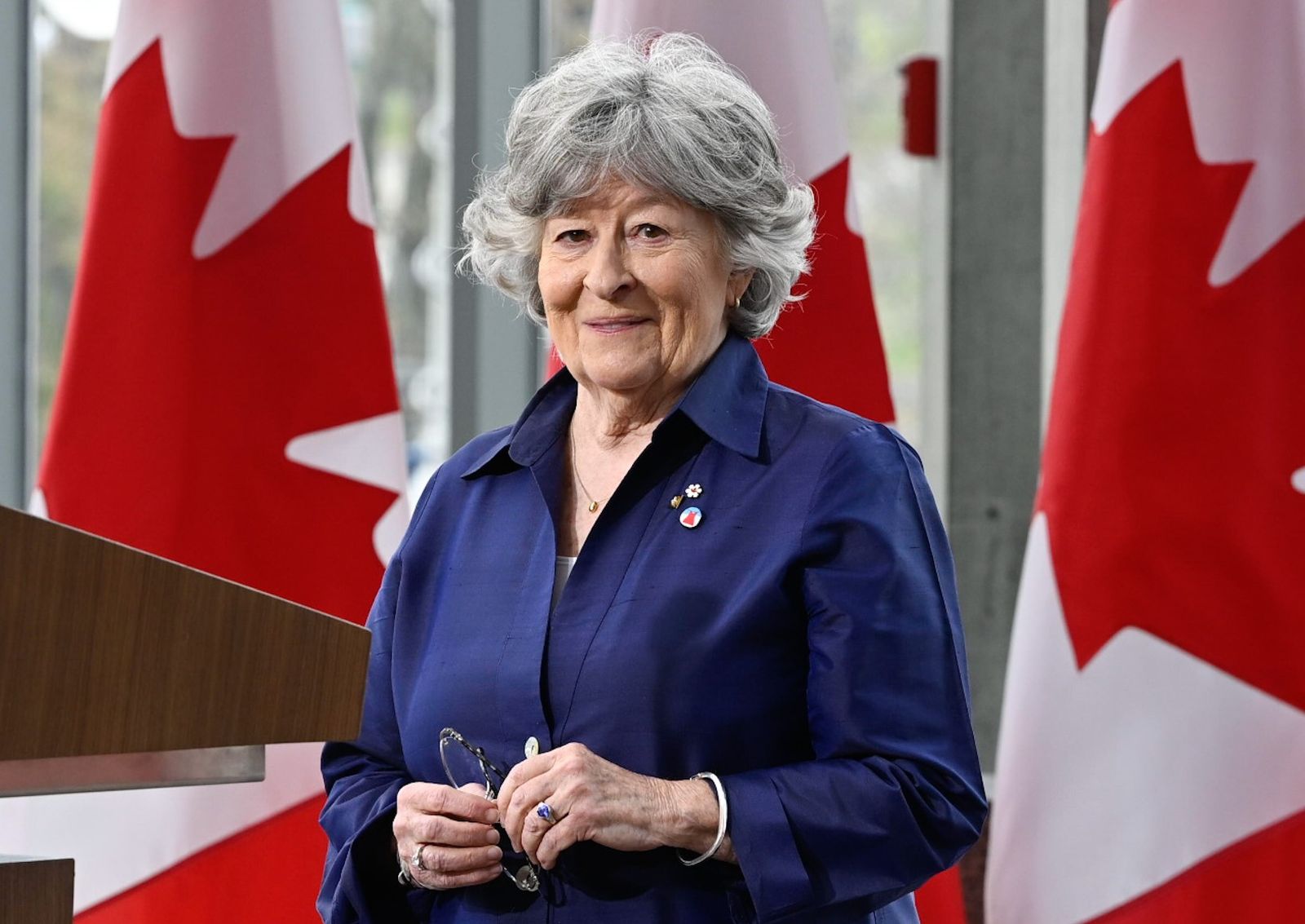
Photo: Crown in Canada on Facebook
The Topline
- Prime Minister Mark Carney announced Louise Arbour will be the next Governor General of Canada, replacing Governor General Mary Simon
- Arbour’s extensive resume includes former Supreme Court justice, UN high commissioner for human rights, and chief prosecutor of the International Criminal Tribunals for Rwanda and the former Yugoslavia
- She is a companion of the Order of Canada and holds 42 honorary doctorates, in addition to dozens of other honours and awards
- Arbour is fluently bilingual, something Simon struggled with throughout her five-year tenure, which is coming to an end in July
- The governor general is the King's representative in Canada and carries out ceremonial and constitutional duties on his behalf
Never miss another side to every story
Sign up for The Level's 5-minute newsletter, 3x per week
Thanks for subscribing!
Check your inbox for an email to confirm you're on the list. If there's no email, check your spam filter just in case, then mark us as 'not spam' so that you never miss an issue.
Switch sides,
back and forth
It’s central to the fabric of Canada
If your head of state happens to be a King who lives 5,000 kilometres from Ottawa, someone has to carry out his responsibilities here at home.
The governor general is just that. It’s the person who carries out the duties King Charles would perform if he lived in Canada.
This includes things like swearing the prime minister into office, delivering the speech from the throne, and signing acts into law by granting royal assent. From a constitutional perspective, these are big deals.
The governor general is also our military’s commander-in-chief and is responsible for “presenting honours and awards to acknowledge extraordinary people on behalf of all Canadians.”
If you see the governor general as largely ceremonial, you’d be right. But that doesn’t mean it lacks importance.
“The ceremonial stuff is delegated to someone who doesn't have substantive political responsibilities,” Bradley Miller, associate professor at The University of British Columbia, explained to The Level.
Typically, countries have a separate head of government and head of state. That’s because the state and the government aren’t the same thing.
The “state” refers to the enduring structure of a country that never changes. Things like the constitution, the legal system, the military, and its sovereignty.
In Canada and the United Kingdom, the head of state is a monarch. In countries like Germany or India, it’s a mostly ceremonial president as head of state, separate from the prime minister.
And in the United States and France, the president is both head of state and head of government.
“The Americans have a problem where they have someone who runs the government, but who also has to greet ambassadors, hand out medals, and give lots of ceremonial speeches. And that stuff is weirdly time-consuming,” added Miller.
It’s best to think of the governor general as someone who represents something special and unique to Canada’s history and fabric.
“A fantastic governor general is someone who makes Canadians excited to attend their events and participate in the ceremonies of the state,” according to Miller.
Take former Governor General Adrienne Clarkson as an example.
“People were excited to meet her and to attend events that she was presiding at. She brought a level of public awareness to some of the ceremonial things that she participated in, from Remembrance Day events to Order of Canada ceremonies to ceremonies involving new Canadians.”
Critics point out having a governor general isn’t cheap — even after they leave office. It’s fair for Canadians to question whether some of those costs are justifiable.
But removing the position isn’t simple. That would require constitutional change to abolish the monarchy and replace it with another role as Canada’s head of state.
Miller suggests keeping things intact is better anyway.
“I don't think it would be wise for any governor general to abandon the traditions and the elite protocols of the office,” he said.
“We want some ceremony. We want that person to be kind of a big deal. If we abandon what people in the U.K. refer to as ‘the tradition of magic and mystery,’ we might as well just have a robot signing bills into law with the autopen.”
It’s a very expensive rubber stamp
If Canada's head of state serves a ceremonial role, that’s fair enough. But does it need to cost as much as ours does?
At a time when the Carney government is facing a $67 billion budget deficit, it might finally be time to make some adjustments.
The Governor General of Canada was originally designed for a country still closely tied to the British Empire, with a monarch an ocean away and limited domestic institutions of its own.
But today, Canada has a mature democracy. The prime minister runs the government. Parliament passes laws. The Supreme Court interprets them.
Which brings up the question: What purpose does the governor general serve beyond ceremony?
Yes, the office executes the King’s constitutional responsibilities by granting royal assent, dissolving Parliament, and swearing in a new prime minister.
But some critics argue those powers are largely a rubber stamp. In fact, the last time the governor general refused to accept the advice of a Canadian prime minister was 1926.
Meanwhile, the costs continue to pile up.
The Level reached out to Franco Terrazzano, director of the Canadian Taxpayers Federation, for his thoughts.
“Regardless of your position on the monarchy, whether you're in favour of the monarchy or against the monarchy, the governor general and Rideau Hall cost taxpayers too much money and waste too much money,” said Terrazzano.
“It is possible to have a governor general in Canada that costs taxpayers significantly less money,” he added.
Some of these numbers are certainly questionable.
Simon’s salary was $378,000 last year. That’s $75,000 more than what her predecessor was paid in 2019. She lives rent-free at Rideau Hall, which comes with a full staff of housekeepers and a personal chef, and receives a $130,000 clothing allowance over five years.
During her first year in office, Simon’s travel costs alone were $3 million.
Even after a governor general leaves the role for someone else to take over, the bills keep coming.
CBC News reported that Canadians covered $554,000 in expenses last year to support five former governors general, without any explanation from Rideau Hall on what those expenses were for.
Carney said he was unaware of the details. “I’ll look into it, ensure that ... there’s adequate transparency around the expenses.”
Former Governor General Julie Payette resigned before the end of her term after a workplace review found she had “belittled, berated and publicly humiliated Rideau Hall staff” and “created a toxic, verbally abusive workplace.”
Yet Payette still gets a special pension worth up to $4.8 million if she continues collecting until age 90.
“The governor general, and former governors general, take some of the most lavish and expensive perks in government, which is saying a lot,” added Terrazzano.
“Canadians don’t need to pay someone nearly $400,000 a year for a completely ceremonial position. Canadians shouldn't be paying for a governor general’s clothes, and Canadians shouldn't be on the hook for a lavish pension and expense account for former governors general.”
