


The Topline
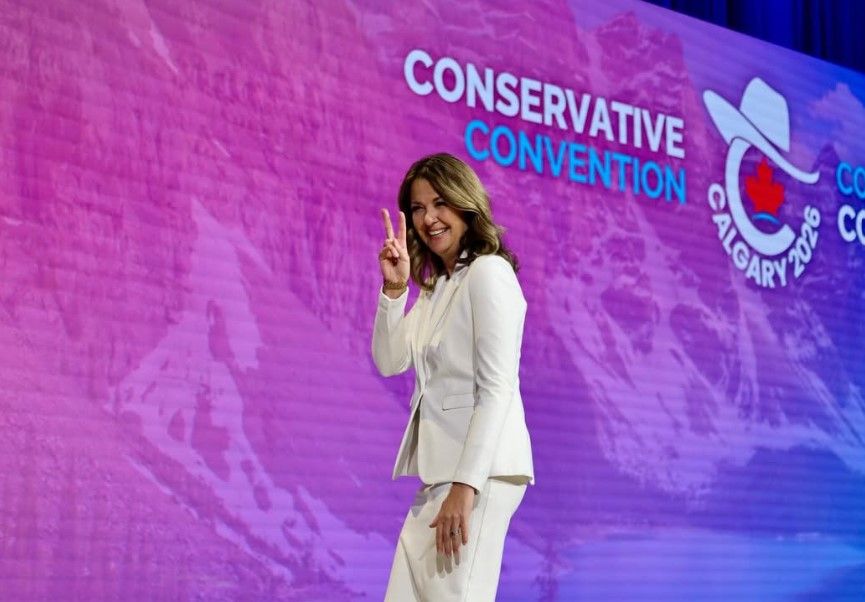
- In a letter to Prime Minister Mark Carney, Alberta Premier Danielle Smith threatened to withhold funding for federally appointed judges unless the province gets more say in choosing provincial superior court judges and Supreme Court of Canada justices.
- This comes after Smith said that she wished she could “direct” judges, in response to a question about bail decisions on her weekly radio call-in show
- Days later, Alberta’s three top judges issued a rare public statement underscoring the importance of judicial independence, highlighting that judges must decide cases “based solely on the law and evidence presented.”
- Meanwhile, Supreme Court Justice Sheilah Martin, from Alberta, said she will retire at the end of May. By convention, her spot is expected to be filled by a replacement judge from Western Canada.
Switch sides,
back and forth
More consultation without more control
The system for how federally appointed judges are chosen needs a tune-up.
That’s exactly why Premier Danielle Smith is arguing for “meaningful engagement and collaboration” between Ottawa and Alberta when it comes to who ends up on the bench, both in her province and at the Supreme Court of Canada.
She’s not trying to push politics. In her letter to Carney, she’s clearly advocating for a new, “non-partisan” selection committee. It’s simply meant to bring a provincial perspective into a federal process that can sometimes feel distant from Western Canada.
This isn’t about controlling outcomes. It’s about making sure regional nuances and the desires of Albertans are better reflected in the conversation. Is that really a bad thing?
Besides, at the end of the day, the decision-maker stays the same, at least when it comes to Supreme Court of Canada appointments: the Prime Minister of Canada.
There’s also a trust factor here.
When people know judges are appointed through a process that includes input from their province, it strengthens public confidence.
If the goal is to strengthen public confidence in the justice system, more regional input can help with that.
What Smith is suggesting isn’t wildly unusual. In countries like Australia and the United States, judicial selection processes vary by state or region. Different jurisdictions have different advisory bodies and methods of recommending or approving judges.
Beyond the idea of building more trust in the system, there’s also a very strong logistical reason for making some changes.
When the federal Liberals amended the Official Languages Act in 2023, they brought in stricter bilingual requirements for top court roles.
Because Supreme Court judges are now required to understand legal proceedings without any help from a French interpreter, it narrowed the pool of eligible candidates from Western Canada.
In 2023, the last time there was an open spot for Western Canada, the advisory board put forth only two names , but was supposed to submit three to five. The bilingualism requirement was seen as the main challenge.
None of this means bilingualism isn’t important. But it does raise fair questions about whether the selection system fully accounts for the country’s regional diversity.
And then there’s a positive domino effect. If Alberta gets more provincial input, British Columbia, Saskatchewan, and Manitoba will also need similar roles to ensure they get the same level of input on Supreme Court of Canada appointments.
So this is more about just Alberta. B.C., Saskatchewan, and Manitoba could also benefit from being a bigger part of a process that shapes how federal law is interpreted – for decades to come.
Where does it end?
Withholding funding for additional judges in Alberta is the last thing anyone, let alone the premier, should be suggesting.
Courts across Canada are under enormous pressure to move cases quickly enough to avoid violating Charter rights. When delays get too long, charges can get tossed because the Supreme Court has ruled people have the right to be tried within a reasonable time.
That’s why the idea of squeezing the system as a pressure tactic is ludicrous. It risks worsening backlogs, increasing the chances of cases getting thrown out, and eroding public confidence in the system as a whole.
But if that’s not bad enough, Smith’s threats open up an even bigger issue.
Political influence on the court system.
Any threat from an elected official that suggests the legal system could face financial consequences unless political gains are realized is dangerous stuff. If people start believing judges were chosen for their political values, the concept of a ‘fair trial’ starts to look janky.
Judges are supposed to be independent . They make rulings based on evidence, while interpreting the law as written. It’s what protects the rights of individuals from the priorities of whatever government happens to be in power.
Then there’s the national piece to this. Alberta, in case Smith has forgotten, is part of Canada. The federal system for appointing judges (which already includes provincial input) should be the same for all provinces except Quebec. Quebec has a unique process because of its differing legal history – but the process itself is still federal.
BTW, there’s a good reason for that. Quebec’s legal system is built upon French civil law, while the rest of Canada follows British common law principles. Quebec is therefore legally unique , but still part of Canada’s legal system nonetheless. That’s why Ottawa has to look at Quebec differently.
Alberta, on the other hand, has no “distinct legal traditions” that Smith claimed in her letter to Carney. Smith loves comparing Alberta’s needs to Quebec, but they just aren’t the same.
Letting Alberta reshape the judicial appointment process to suit Smith’s preferences could lead to a patchwork legal system and the perception that federal law is applied differently across provinces.
It’s true that not every court decision goes over well with the public. But leaders should be defending the system, not nudging it toward increased political control. It’s a path that’s very hard to come back from.
