


Neil Malik
Massive AI data centres are coming to B.C. and Ontario
Massive AI data centres are coming to B.C. and Ontario
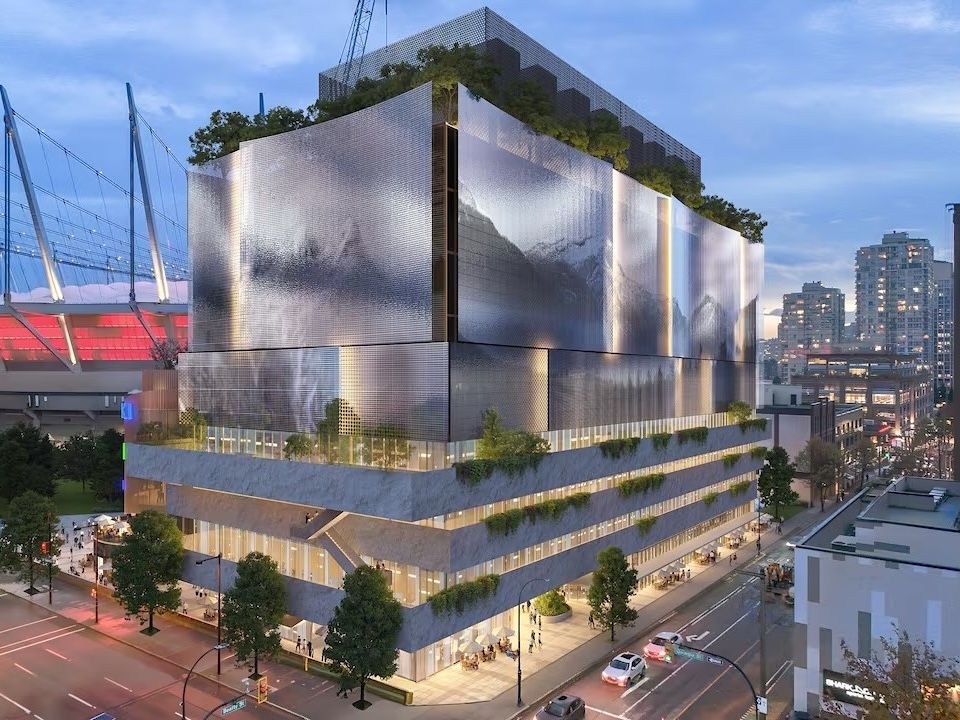
Image: Telus
The Topline
- The federal government and Telus announced plans to build two large data centres in Vancouver and expand an existing data centre in Kamloops, B.C.
- Calling them “AI factories,” Telus says they are designed and built to support the full AI development lifecycle — from model training and fine-tuning to real-world deployment
- These facilities will be powered using 98 per cent clean energy, cooled using recycled water, and will send wasted heat back into the power grid
- Meanwhile, HIVE Digital Technologies has unveiled plans to build one of Canada's largest AI data centres in the Greater Toronto Area
- Earlier this year, federal NDP leader Avi Lewis called for a moratorium on new AI data centres until stronger environmental, labour, and public-interest rules are in place
Never miss another side to every story
Sign up for The Level's 5-minute newsletter, 3x per week
Thanks for subscribing!
Check your inbox for an email to confirm you're on the list. If there's no email, check your spam filter just in case, then mark us as 'not spam' so that you never miss an issue.
Switch sides,
back and forth
It’s critical infrastructure
AI is here to stay. Like it or not.
If we don’t build sovereign AI data centres now, we’ll become even more dependent on other countries to provide these services to meet the growing demand.
Canada already outsources data processing and cloud storage to U.S. tech companies like Amazon Web Services, Microsoft, and Google, spending nearly $1.3 billion by 2025.
If that trend continues, it creates two significant risks for Canada.
The first shouldn’t be a surprise, given the current relationship between Canada and the United States. Relying on U.S. infrastructure for core economic functions is seriously risky.
The second might be less obvious, but just as important: the data privacy of Canadians.
Take Canada’s health care system, for example.
A recent article in the Canadian Medical Association Journal argued the use of foreign-owned cloud providers could expose sensitive Canadian health data to foreign laws and governments.
Data servers located in Canada, but owned by American companies, are subject to the Clarifying Lawful Overseas Use of Data ( CLOUD ) Act that could force the disclosure of that data for a criminal investigation.
Michael Geist, law professor and Canada Research Chair in internet and e-commerce law at the University of Ottawa, flags another risk. He told CBC News that data has become increasingly valuable and could potentially be used by foreign companies to generate AI algorithms.
A national strategy for AI is coming soon . It will reveal the Carney government’s vision for AI and Canada’s plan for “modern privacy and online safety laws, strong national AI safety capabilities, and secure government systems."
All of that heavily depends on having sovereign data centres built and operated on Canadian soil.
It’s no secret Carney believes AI could help transform education, health care, and the federal public service, and that major reforms are needed to make that possible. Homegrown data centres will help Canada achieve these ambitions at scale.
But slowing AI’s roll in Canada risks undercutting those ambitions by limiting access to the computing power needed to make them real. We can’t modernize public services or boost productivity while restricting the infrastructure required to run them.
And right now, at this precarious moment, Canada can’t afford to fall behind.
Would you want one in your backyard?
Data centres don’t make for great neighbours.
The Canadian Centre for Policy Alternatives (CCPA) points out , “Data centres require large and extensive cooling systems to function, meaning they emit constant and repetitive noise from industrial fans and other mechanisms.”
The CCPA adds, “Residents living in close proximity to data centres report difficulties sleeping and other health problems brought on by the incessant low-frequency drone of these buildings.”
But if difficulty sleeping is considered bad for your health, imagine running out of water.
Modern data centres consume enormous amounts of water and electricity, often rivalling the consumption of small cities.
Vancouver is one of the wettest cities on earth. And yet, it’s on the verge of a water crisis.
Each spring, snowpacks close to the city melt and fill reservoirs that supply drinking water to 3 million residents.
But thanks to climate change, CBC News projects the average snowpack is expected to decrease by 60 per cent over the next 30 years.
Are we seriously building massive data centres in a city where the water supply is already under threat?
It’s a similar situation across Canada. The Canadian Climate Institute says much of southern Canada may experience more frequent and severe drought conditions over the next fifty years because of climate change.
Less water also means less electricity. Hydroelectricity produces 60 per cent of Canada’s power. If Canada sees more droughts plus smaller snowpacks, the amount of clean power we produce will be limited.
And it gets worse. Data centres are built to stay online 99.99 per cent of the time. To meet that standard, diesel-powered backup generators are used if the power goes out.
Talk about kicking Mother Nature when she’s already down.
Recent polling makes it clear: Canadians are uneasy about the impact data centres might have on the environment.
Nearly three of four Canadians believe data centres could put pressure on Canada’s electricity grid and increase costs for families, while 71 per cent express concern about their environmental impact, including electricity and water use.
Supporters are quick to point out AI isn’t going anywhere. It’s here to stay.
But if that’s the case, Canada needs stronger oversight and regulation before more data centres get announced. Because once shovels hit the ground, the debate is effectively over.
