


The Topline
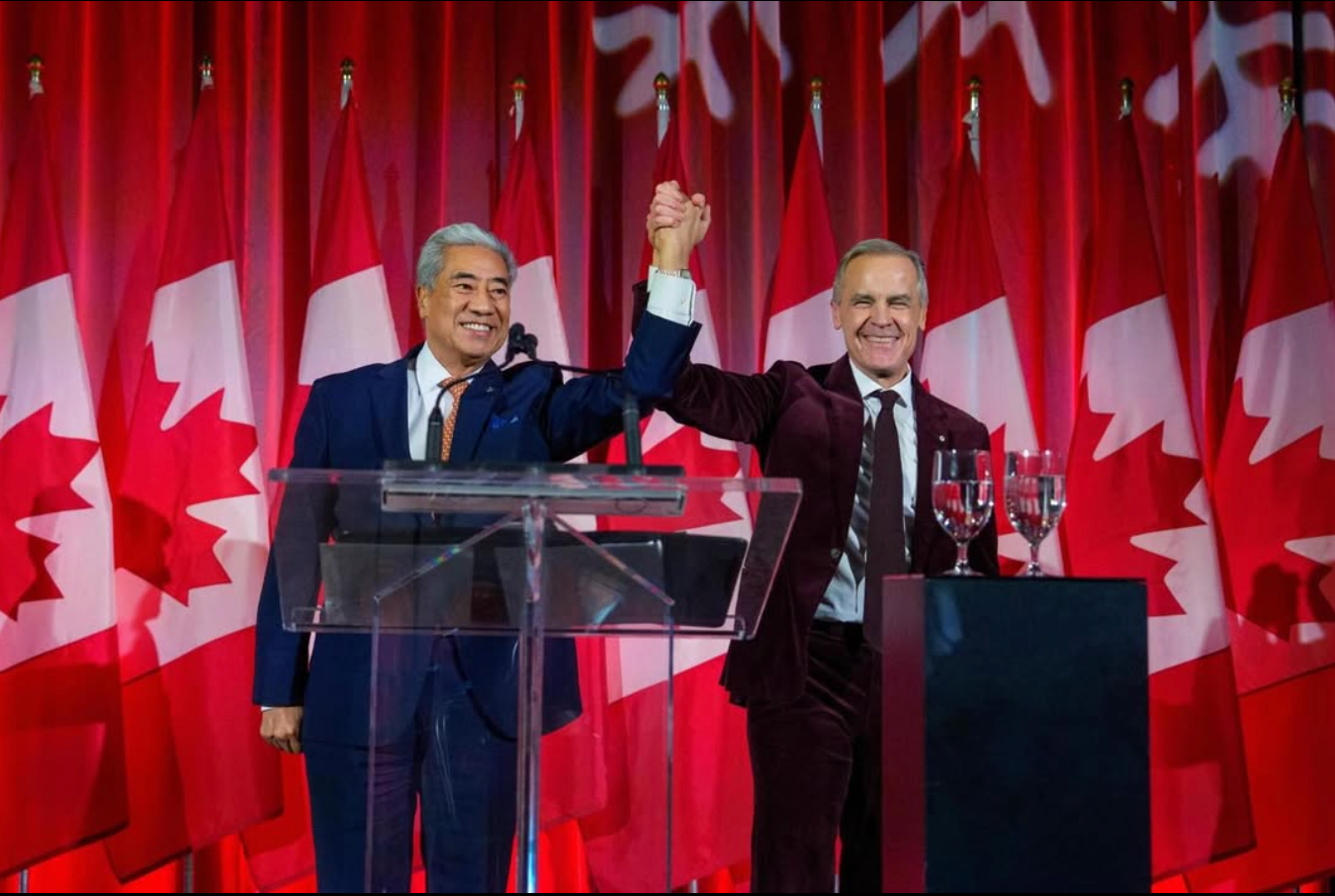
- Ontario MP Michael Ma announced that he is leaving the Conservative caucus and joining the Liberals – six weeks after Nova Scotia MP Chris d'Entremont did the same
- The decision to switch parties between elections – better known as “crossing the floor” – means the Liberals are now only one seat away from having a majority government, months after Canadians elected a Liberal minority government
- Conservative leader Pierre Poilievre faces a leadership review from his party members in January 2026, when he’ll likely have to defend the fact he’s lost a number of MPs
Switch sides,
back and forth
That’s not what I voted for
I don’t know about you, but when I vote, it’s for the party and the leader.
Yes, I care about who my local representative is, but only to a certain point. If George Santos ended up being my elected representative, I’d be angry. I’ll give you that.
But otherwise, the party and leader is typically what gets my ‘X’. I’m guessing I’m not the only one who votes that way, which is why two MPs in six weeks switching parties (with possibly more to come) has generated so much controversy.
Several countries have laws to stop elected representatives from crossing the floor. New Zealand, for example, has something called the Electoral (Integrity) Amendment Act 2018 , which literally exists to stop MPs from changing election results by crossing the floor.
In Canada, that would mean no matter what happens, the mandate of the voters remains unchanged: Canadians voted for a Liberal minority government and it stays that way until another election is called.
Research from 2018 showed that 42 per cent are of the opinion that politicians leaving one party and joining another between elections should not be allowed. So while no such law exists in Canada, maybe there should be.
For politicians, it’s difficult to cross the floor without looking like they’ve betrayed the trust of the voters, volunteers, and door knockers who helped get them elected, especially when they attend both party’s Christmas parties two nights in a row .
The party that lost a member pretends like they don’t need them. The gaining party celebrates as if they had something to do with the fact this MP defected. It’s not a good look for anyone.
But more importantly, when the next election rolls around, it rarely works out for the best. Research from the University of Acadia published in The Walrus backs that up.
From 1980 to 2021, a majority of parliamentarians who left their party weren’t re-elected. Of those who sought re-election under a different party banner, two-thirds failed. As for those who ran again as independents, nearly three quarters failed.
Which suggests at the end of the day, this just puts the power back to the people…where it belongs anyway.
Independence is the whole point
Yes, I typically vote for the party instead of the local MP – but digging into it, it’s clear to me that Canada’s electoral system was designed around electing an individual, and for very good reason.
Canada is believed to be one of the most party-disciplined parliamentary systems in the democratic world. Translation: You better toe the party lines – or else .
But what if you’re an MP, and you (or your constituents) genuinely disagree with the decision-making of your party’s leader? There aren’t many options for you to voice your opinion without consequences from inside the party. For example, being removed from cabinet or a committee.
That’s why under House of Commons rules , the seat does not legally belong to the party. The elected individual, not the party, is ultimately responsible to his or her constituents. It also means the party can’t push MPs around without any consequences.
So it’s no coincidence when announcing his decision to switch parties, Ma said he listened carefully to the people of his riding. Chris d’Entremont said similar things when he announced his decision to leave the Conservative party and join the Liberals.
By allowing floor-crossing in the House, it preserves a narrow escape hatch from party pressure. MPs don’t merely become spokespeople for centrally approved talking points, but can react independently to party shifts, leadership changes, or constituent feedback.
Otherwise, party leaders would have an even tighter grip on the members of their party, knowing dissenters have few options without blowing up their mandate.
More often than not, crossing the floor doesn’t lead to a favourable outcome for the individual in the next election, proving that voters get the final say at the end of the day. And that’s ultimately what matters.
