


Neil Malik
The $100 billion high-speed train Canadians can’t agree on
The $100 billion high-speed train Canadians can’t agree on
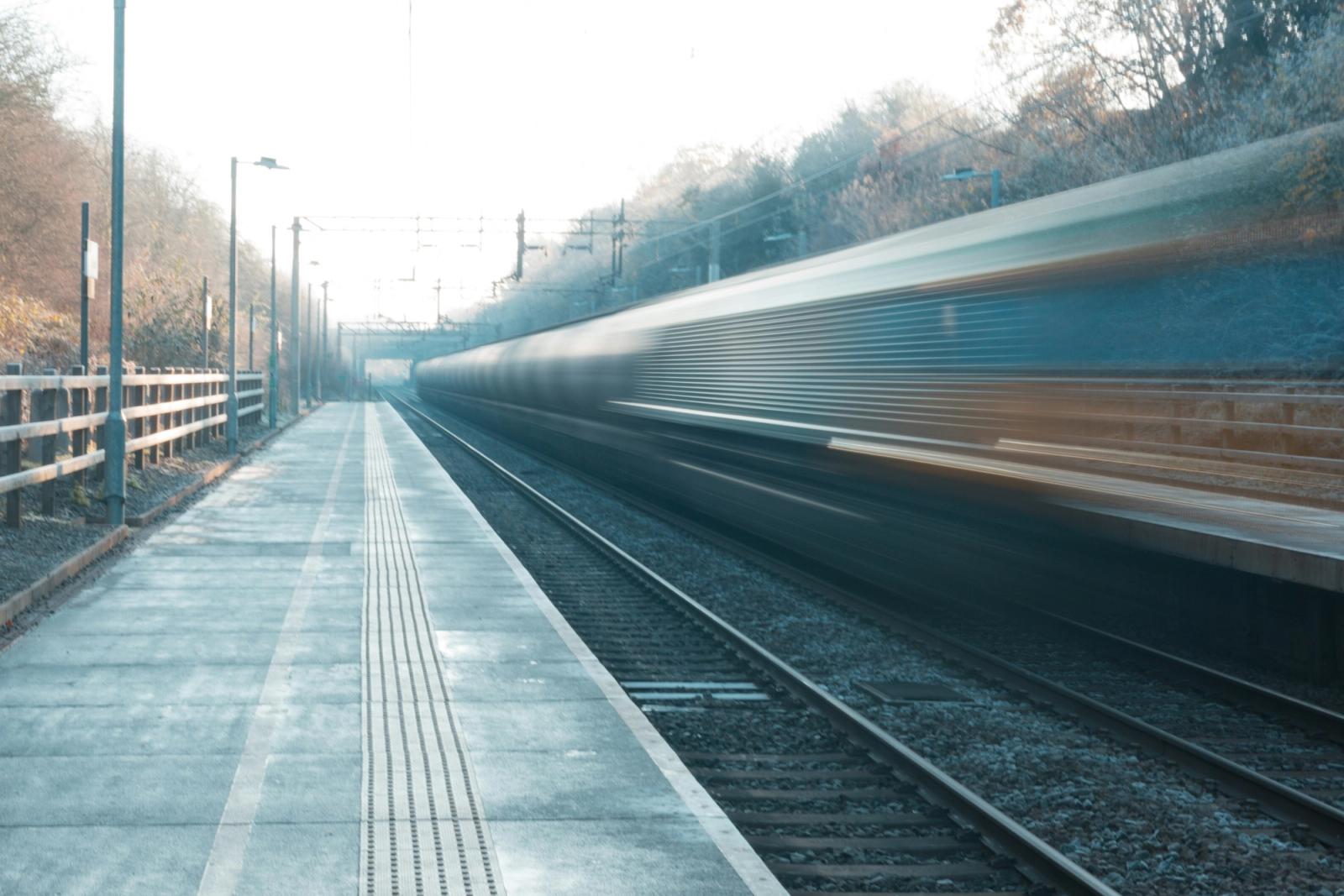
Photo via Unsplash
The Topline
- A recent poll suggests the Alto high-speed rail network between Toronto and Quebec City is both the most supported and the most opposed item on the federal government's list of major projects.
- Probe Research surveyed 1,300 Canadians earlier this month and found 61 per cent of respondents supported the project, while 19 per cent opposed it to some degree.
- Following three months of public consultation , more than 10,000 people attended 26 in-person sessions, with more than 15,000 comments left on an interactive route map.
- Alto is a federal Crown corporation in charge of building the high-speed railway that will feature trains reaching speeds of 300 km/h.
- Construction is expected to begin in 2029 or 2030, with completion expected between 2037 and 2040.
Never miss another side to every story
Sign up for The Level's 5-minute newsletter, 3x per week
Thanks for subscribing!
Check your inbox for an email to confirm you're on the list. If there's no email, check your spam filter just in case, then mark us as 'not spam' so that you never miss an issue.
Switch sides,
back and forth
Build now, or fall behind
Support for a high-speed rail line comes down to this: Canada needs to build for the country it wants to become, not the one it has today.
Prime Minister Mark Carney recently backed that up by calling the Alto high-speed rail project a boon to the economy while the Major Projects Office describes it as a “bold and ambitious solution” to our “looming transportation crisis.”
Think of it this way. Alto president and CEO Martin Imbleau wrote in the Toronto Star that over 18 million people live throughout the corridor. That’s expected to reach 22 million in 15 years. Half of our national GDP is generated from this region alone.
Carney said the project will contribute more than $35 billion to the Canadian economy and will create over 50,000 jobs. That’s a big deal, considering how many jobs are being lost right now because of the global trade situation.
The cost of building the rail line is high, but this isn’t just spending — it’s an investment. Pour roughly $100 billion into high-speed rail now and you unlock over $35 billion in new economic activity, 50,000 jobs, not to mention a way better travel option through the Toronto–Quebec City corridor.
If you’ve ever taken Via Rail, you’re probably no stranger to delays. They usually occur because passenger trains are sharing tracks with freight trains, but cargo gets priority and people are forced to wait.
That won’t be a problem anymore because Alto will build dedicated passenger tracks for its trains to reach speeds of 300 km/h. That’ll take you from Toronto to Montreal in just three hours — down from six.
With trains every 15 to 30 minutes, day trips become easier, which eliminates the need for expensive hotel stays, while commuters between Montreal and Ottawa will have a 60-minute option between the two cities.
Imbleau told CBC Radio that affordability is “the name of the game.” He emphasized that his train needs to be cheaper than other options, especially flying, taking Via Rail, or driving, and therefore affordability is a core mandate.
Not only will the trains be more convenient, they’ll reduce greenhouse gas emissions. As more people choose trains powered by electricity, Alto expects to reduce demand for short-haul flights and remove the carbon equivalent of 100,000 cars from the road each year.
If you’ve ever thought, “Why didn’t we build that years ago when we had the chance?” this is one of those moments. If we don’t get going on this now, we’ll likely regret it later.
Spend now, regret it later
There’s an old saying: Good, fast, cheap — you can only have two.
The Alto high-speed rail line might be good. But fast or cheap?
No chance.
Alto estimates the total cost at between $60 billion and $90 billion, while some reports suggest $120 billion over the course of the 17-year project. Overruns will certainly push it even higher.
Conservative MP Dan Albas wrote that rail megaprojects globally average a 44.7 per cent cost overrun even after contingencies. Take California’s high-speed rail for example. It ballooned from $30 billion to a whopping $128 billion.
It’s wild to think about what else we could do with that kind of money. Think about public transit, health care, or affordable housing for our kids.
The rail line needs 24 million riders annually to break even. In 2024, Via Rail passengers on the Windsor–Quebec City line numbered just over four million.
It begs the question: Are taxpayers okay with subsidizing Alto for generations to come, especially when most Canadians will never ride it?
Besides the cost, Alto has been called “the largest expropriation event in Canadian history” by Conservative MP Scott Reid. Alto president and CEO Martin Imbleau told CBC Radio the process to acquire “thousands of properties” will probably start in 2027.
Some affected property owners recently attended an online seminar hosted by a Toronto law firm that specializes in expropriation.
Their advice was blunt. Accept the loss, take what’s offered, and get a lawyer because the process is painful. Even though actual construction could be 10 years away, property values have already started dropping.
You might ultimately be paid fair market value, but there’s still the ordeal of moving somewhere else, plus the emotional attachment many people have to the property being taken.
A Coalition for Better Rail argues that their alternative proposal — running a 200 km/h line along the existing Highway 401 corridor — would drastically reduce or eliminate the need for new greenfield land expropriation.
And that brings up a whole other debate. Why is Alto even considering a “southern route” through farmland, cottage country, and historic villages when the alternative “northern route” uses mostly Crown land?
Finally, there’s the environmental impact from building and operating a rail line. Yes, it’s powered by electricity, which is great, but a decade of heavy construction produces a significant carbon footprint on its own.
Natural habitats and forests will need to be cleared. Heavy equipment runs on diesel. It’s not going to be an environmentally friendly project by any means.
If Canadians want better transportation options between Toronto and Quebec City, couldn’t we look at an option that doesn’t cost a twelve-figure sum, or one that displaces thousands of Canadians from their homes?
Just a thought.
