


The Topline
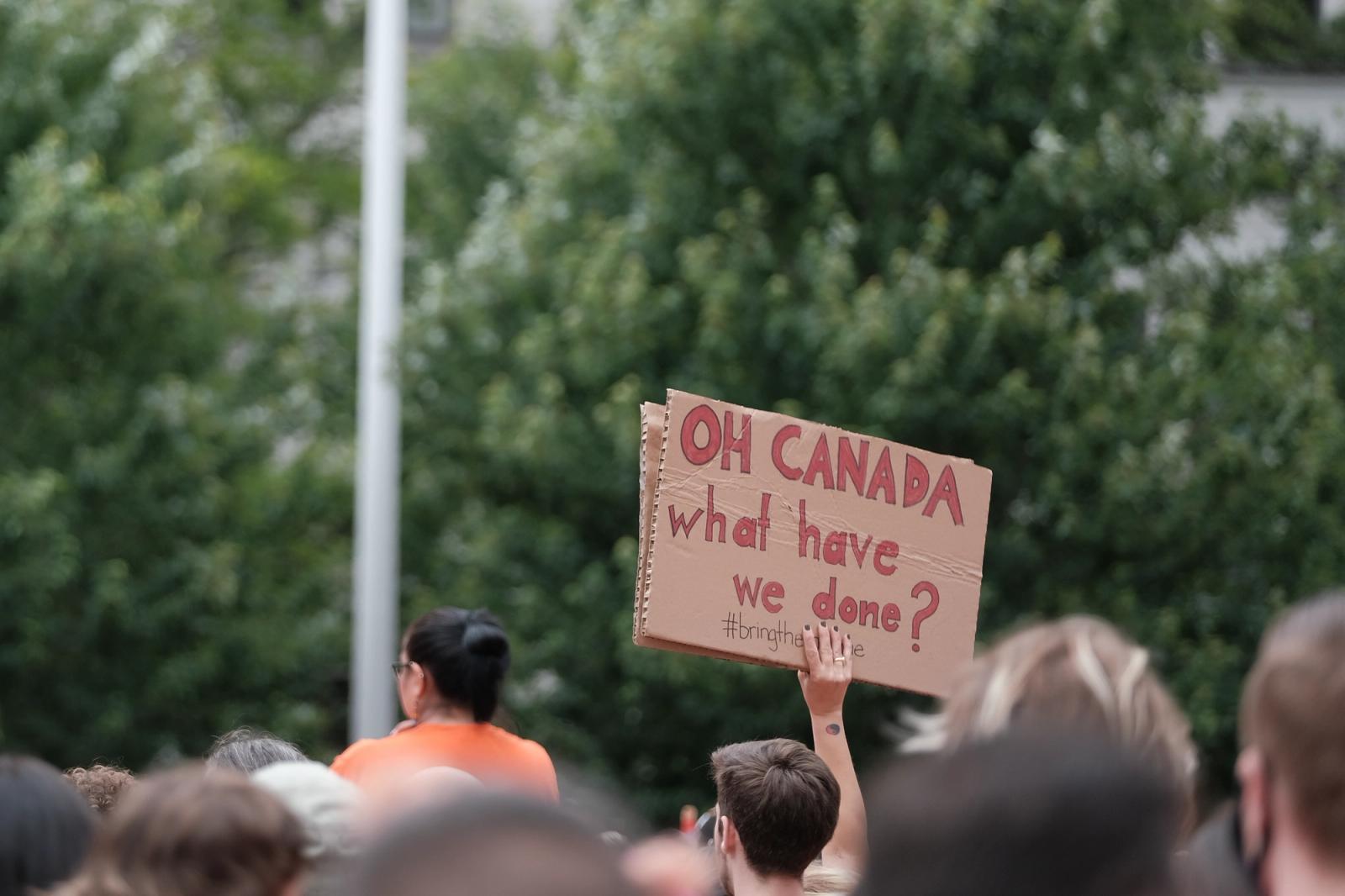
- The National Post published an opinion piece in November arguing that Indigenous land wasn't stolen because "everyone alive today is descended from settlers," including the first peoples of the Americas
- The debate has intensified following a B.C. Supreme Court ruling that granted the Cowichan Tribes Aboriginal title over lands in Richmond, B.C., declaring previous Crown grants "defective and invalid" – a ruling that has faced significant political fallout
- The Supreme Court of Canada has stated that Aboriginal title exists as a pre-existing right that was never legally terminated in many parts of the country
- Editor’s note: This is one of those sticky situations where we’re covering a point of view on a topic that we don’t necessarily agree with. However, the perspective that Indigenous land was not, in fact, stolen is gaining traction in certain online forums. Now that it’s been promoted in a prominent national newspaper, we believe it needs to be understood, even if it's controversial and / or disagreeable
Switch sides,
back and forth
Everyone came from somewhere
Canada wasn't stolen. It was settled, negotiated, signed over, and then endlessly litigated as a result. But "stolen" simplifies history to the point of absurdity.
This view has been promoted for years by conservative writers, including Conrad Black, the late Rex Murphy, and various authors associated with conservative think tank the Fraser Institute. It was articulated most recently in a National Post piece, published last month and written by Institute-affiliates Mark Milke and Tom Flanagan. Together, they argue that Canada was "built on land that was received from the Indigenous in exchange for benefits that continue today."
The authors argue that the Americas were settled in waves from Asia, and that the latest Indigenous settlers had a 15,000-to-20,000-year head start on the first European settlers.
Since Homo sapiens evolved as a distinct species in Africa about 315,000 years ago, Milke and Flanagan argue that nobody is truly "from" the Americas in any meaningful biological sense. Migration is the story of all humanity. Some people simply got here earlier than others, but in evolutionary time, 15,000 years is essentially a rounding error.
The authors also question whether being here first creates permanent obligations. If Indigenous nations aren't responsible for what their ancestors did to other Indigenous nations – and there’s a legitimate argument to be made that they’re not – then why should descendants of Europeans be held eternally responsible for what their ancestors did?
War, displacement, and territorial conflict are constants in human history. Everyone's ancestors fought, displaced, or conquered someone at some point.
In their view, the treaties signed by the Indigenous people were made voluntarily and are valid as a result. Those treaties were often negotiated under extreme pressure, yes, and many of the promises weren't kept, but Indigenous leaders did have autonomy in these negotiations and, in the authors’ view, they received benefits in exchange for their land – schools, reserves, etc.
Flanagan has argued elsewhere that characterizing this history as simple theft erases Indigenous agency at the time and negates centuries of diplomacy and negotiation between Europeans and First Nations. There was the Great Peace of Montreal , the Treaty of Niagara , the whole Louis Riel thing , and on and on.
Indigenous nations are also not a monolith, and not all describe their situation as a theft. Many, including the Haida Nation, several Cree nations and Yukon First Nations, lean on frameworks like “nation-to-nation relationship,” “shared decision-making,” and “renewing broken treaty relationships,” rather than simply claiming the land was taken from them. Others simply see it as the Crown failing to hold up its end of a bargain, not grand larceny.
In other words, some believe that the history is far more complex than to simply say the land was stolen. Then again…
Stolen is stolen is stolen is stolen
Indigenous peoples had land rights here long before Canada showed up — and in huge parts of the country, the government never actually secured those rights through any real legal process. The Supreme Court of Canada has said as much. It’s kind of a full-stop situation.
The Royal Proclamation of 1763 stated that the Crown could only acquire Indigenous lands through proper treaties, yet vast territories were simply claimed anyway, without any treaties. 95 per cent of British Columbia, for example, remains unceded territory – no treaties were signed with most First Nations.
Let’s forget all that for a minute, though. Let’s talk migration, because it’s an important point to anyone arguing against the “stolen land” idea.
Aboriginal title doesn't depend on evolutionary timelines or who descended from Homo sapiens first. It originates from Indigenous peoples' occupation, use, and control of ancestral lands prior to colonization. Indigenous peoples didn't just wander through what is now Canada 15,000 years ago and call dibs.
No, they built nations with governments, legal systems, diplomatic relations, established territories, and systems for managing resources. The Crown recognized this – that's why early partnerships were forged through treaties and were based on mutual respect and co-operation. That’s what the Royal Proclamation was all about.
But the treaties that do exist in this country were often signed under coercive conditions, where the Crown held all power. The Numbered Treaties , for example, were negotiated during famine, bison collapse, disease outbreaks, and extreme power imbalances — conditions historian Sarah Carter and legal scholar Sheldon Krasowski call fundamentally unfair.
Case in point: Indigenous populations were facing starvation as bison populations collapsed. Meanwhile, the federal government took that opportunity to control the written text and translation of the agreements. The two sides frequently had completely different understandings of what was being agreed to.
The Canadian government has acknowledged all of this and has stated: "Canada's constitutional and legal order recognizes the reality that Indigenous peoples' ancestors owned and governed the lands which now constitute Canada prior to the Crown's assertion of sovereignty."
That’s another full-stop situation. Our government has stated, not-so-implicitly, that the land was taken.
