


Neil Malik
What Canada wants from trade talks, and what Trump wants instead
What Canada wants from trade talks, and what Trump wants instead
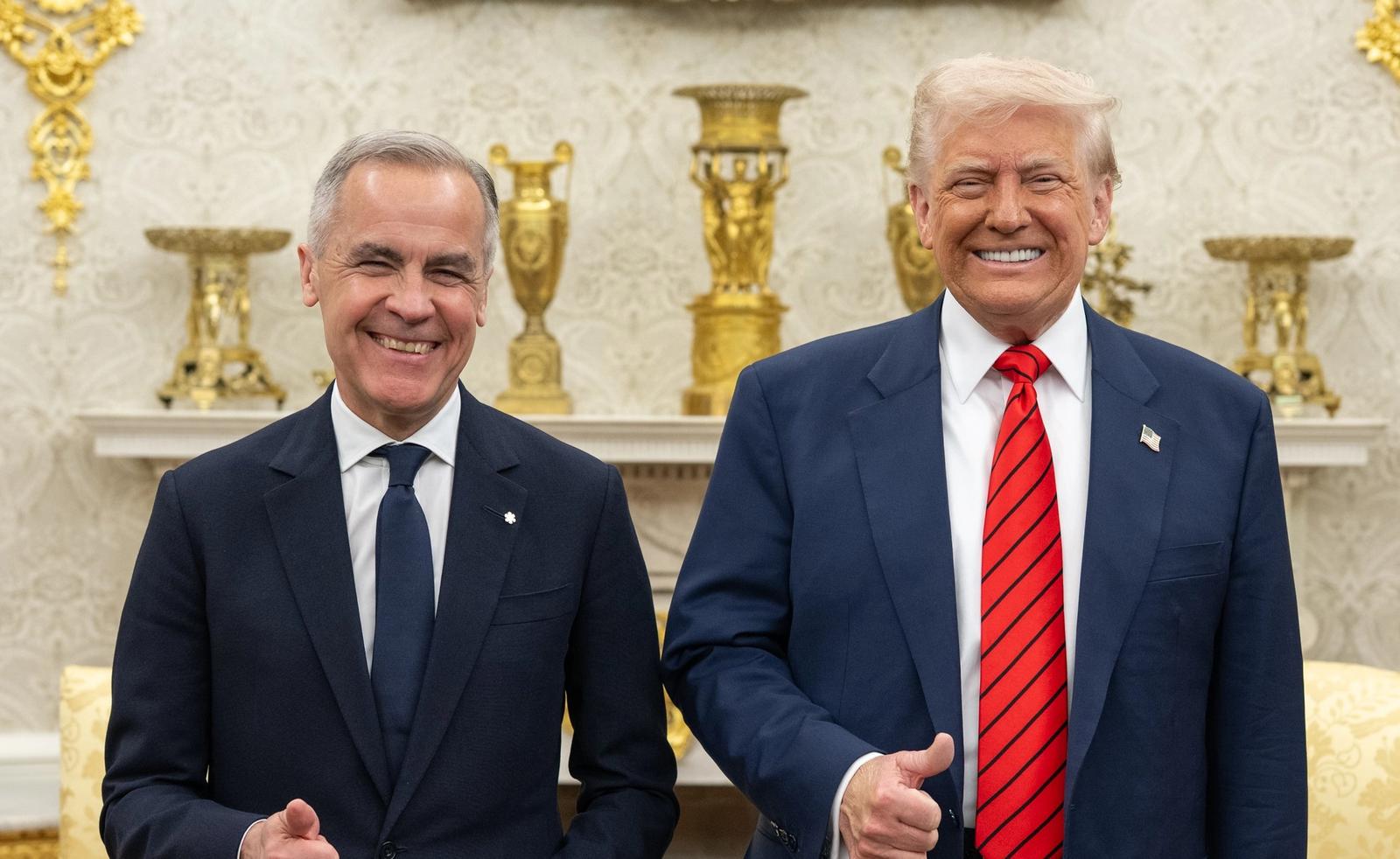
Image: The White House, Public domain, via Wikimedia Commons
The Topline
- The Canada-U.S.-Mexico Agreement (CUSMA) is the free trade agreement between Canada, the U.S. and Mexico
- Under CUSMA, approximately 90 per cent of goods traded between Canada and the U.S. are exempt from tariffs, lowering costs for importers and exporters
- Six years after it was first signed, all three countries must state by July 1 whether they want to renew or renegotiate it
- Both Canada and Mexico have suggested a renewal
- President Donald Trump has been highly critical of CUSMA, calling it “irrelevant” and claiming that Canada needs it more than the U.S.
- Trump originally praised the deal in January 2020, calling it “the fairest, most balanced, and beneficial trade agreement we have ever signed into law.”
Never miss another side to every story
Sign up for The Level's 5-minute newsletter, 3x per week
Thanks for subscribing!
Check your inbox for an email to confirm you're on the list. If there's no email, check your spam filter just in case, then mark us as 'not spam' so that you never miss an issue.
Switch sides,
back and forth
You need us more than we need you
Trump’s book, The Art of the Deal, is a window into his country’s approach to free trade negotiations with Canada.
In one chapter, he writes , “The best thing you can do is deal from strength, and leverage is the biggest strength you can have. Leverage is having something the other guy wants. Or better yet, needs. Or best of all, simply can’t do without.”
Unfortunately for Canada, he’s not entirely wrong about that.
The Office of the United States Trade Representative (USTR) describes Canada as a close trading partner. In 2024 “Canada exported over three-quarters of its goods to the United States and imported almost half of its goods from the United States.”
Trump also writes, “The worst thing you can possibly do in a deal is seem desperate to make it. That makes the other guy smell blood, and then you’re dead.”
Translation: He’s in no rush to come to the table.
But for the sake of this article, let’s assume the two countries will eventually get together to negotiate changes to CUSMA.
In a January interview with The New York Times, U.S. trade representative Jamieson Greer called out three main issues with Canada: dairy, electricity transmission and digital regulation.
Let’s start with digital regulation. The U.S. isn’t happy over Canada’s plan to force U.S. streaming platforms to contribute 15 per cent of their Canadian revenues toward supporting Canadian content.
Seems like Carney listened because this week he directed the Canadian Radio-television and Telecommunications Commission (CRTC) to revisit that plan entirely. So let’s cross that one off the list.
Arguably the biggest issue is the U.S. wants more access to the Canadian market for dairy products, but Canada hasn’t budged.
Canada’s dairy system operates under a system known as supply management . Essentially, farmers control the supply of dairy products in order to keep prices stable. That makes life easier for Canadian farmers and reduces the need for government subsidies.
But supply management also limits the amount of foreign dairy products imported into Canada, and that goes against CUSMA (known as USMCA in the U.S.), according to Commerce Secretary Howard Lutnick.
When describing Canada, he recently told a Senate committee, “We are trying desperately to get them to live to the deal that they have on USMCA and stop treating our dairy farmers so poorly.”
The last thing Greer noted was electricity transmission.
A USTR report says Montana energy producers believe the Alberta Electric System Operator (AESO) is favouring Alberta’s producers for electricity, even when Montana is selling electricity to the province at the same price.
In other words, they feel they aren’t getting fair and equal access to what’s supposed to be a competitive North American electricity market.
When you add it all up, the importance of CUSMA to Canada’s economy is enormous. It covers roughly $1.3 trillion annually in goods and services and protects 90 per cent of Canadian exports from Trump's tariffs.
Numbers like that mean the U.S. has leverage. And they’re dealing from strength.
We know what we're doing
Carney is no dummy.
He’s the former governor of the Bank of Canada and Bank of England, and holds a Bachelor of Economics from Harvard University and a PhD in Economics from Oxford University.
If anyone understands the importance of free trade to Canada, it’s this guy. He also understands how Trump operates.
Trump loves flattery. He thrives on praise. He craves winning a negotiation by making the other side cave to his demands.
That’s exactly what the other G7 countries did. They might have been holding their noses at the time, but they folded under pressure and signed new trade deals that arguably aren’t that great for them.
Carney knows if we get too eager and submit like the others, we’ll end up worse off than we are now, especially with CUSMA blocking tariffs for approximately 90 per cent of trade between Canada and the U.S.
But not all industries were saved from tariffs. Trump’s tariffs on Canadian steel, aluminum and lumber are punishing, especially for Ontario and its auto industry
Employment in Ontario fell by 52,900 jobs in the first quarter of 2026. That’s the steepest quarterly job loss since early 2009, excluding the pandemic.
But Ottawa’s standing its ground, knowing the U.S. also sees benefits from free trade, and Trump might soon feel some pressure if CUSMA isn’t renewed or renegotiated soon.
Trump’s own Office of the United States Trade Representative (USTR) admits “Canada has consistently been one of the top two trading partners for the United States.”
The USTR said Canada imported $450 billion US in goods and services in 2024. It’s a massive customer of the U.S.
Take corn, for example. The National Corn Growers Association told Brownfield Ag News CUSMA represents 1.8 billion bushels of corn demand, contributing $20 billion US to the U.S. economy.
Ken Roberts, trade columnist for Forbes.com, wrote that 61 per cent of U.S. oil imports came from Canada in 2025. That’s the most from a single country ever recorded in the modern era.
Critical minerals are another major need for U.S. defence, batteries and manufacturing industries. The U.S. wants secure supply chains that don’t depend on China.
Even though Carney told reporters this week he won’t use existing contracts for energy and minerals as bargaining chips, he questioned whether Canada should further integrate our energy industries — especially if it gives the U.S. more leverage.
In other words, if the U.S. ever wants more access to Canadian energy, they’re going to have to rebuild trust, but also make it worth our while.
Critics often point out that last summer Carney promised he’d get “the best deal for Canada” and that we’re still waiting.
If the best deal takes more time, it’s worth it.
"The Government of Canada will not accept a bad deal," Carney told reporters. "Our objective is not to reach a deal whatever it costs. We are pursuing a deal that will be in the best interest of Canadians."
