


Neil Malik
Who should have the final say on our rights and freedoms?
Who should have the final say on our rights and freedoms?
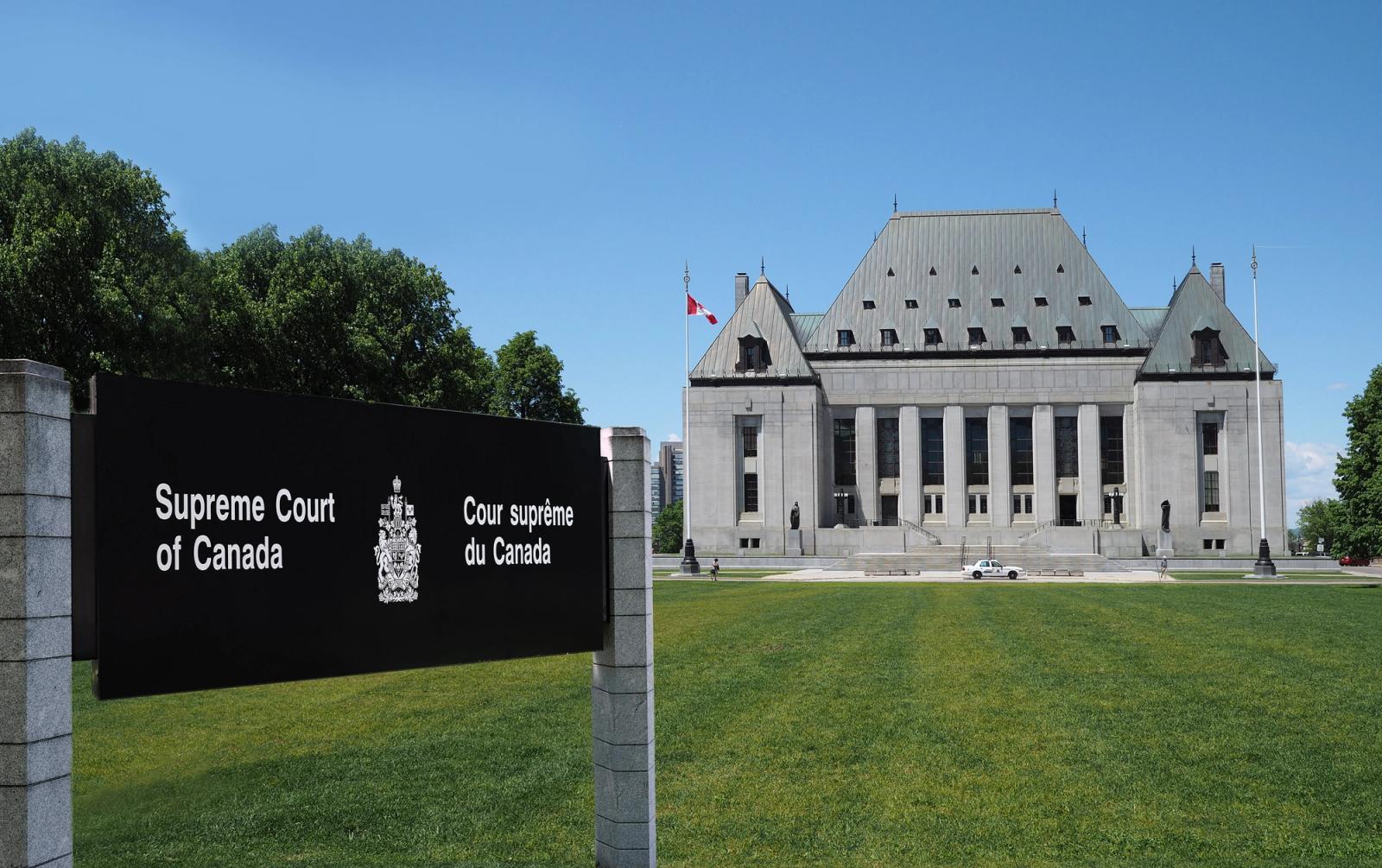
Photo via Spiroview Inc, Shutterstock
The Topline
- The Supreme Court of Canada is about to hear one of its most consequential cases in years. It’s centred on Section 33 of the Canadian Charter of Rights and Freedoms – better known as the notwithstanding clause.
- The clause allows federal or provincial governments to disregard some of the Charter’s protections granted to Canadians when passing new laws.
- Notably, the Quebec government used the clause when it banned public servants from wearing religious symbols at work, including crosses, hijabs and turbans.
- That law, known as Bill 21 , is now before the Court, which must decide whether the use of the clause was valid.
- More broadly, the ruling could shape who ultimately has the final say over Canadians’ rights and freedoms: elected politicians or the Supreme Court.
Never miss another side to every story
Sign up for The Level's 5-minute newsletter, 3x per week
Thanks for subscribing!
Check your inbox for an email to confirm you're on the list. If there's no email, check your spam filter just in case, then mark us as 'not spam' so that you never miss an issue.
Switch sides,
back and forth
The power stays with the voters
The notwithstanding clause isn’t some kind of legal mistake or a sneaky loophole for politicians. It was written into the Charter of Rights and Freedoms for good reason.
When the Charter was created, some provinces were concerned it would give Ottawa too much power and reduce their sovereignty. So the clause was added because those provinces made it clear they didn’t want courts to have the final say on all legislation.
Speaking of judges, they are appointed – not elected. That means the public doesn’t have much influence over which people make the big decisions that affect our rights and freedoms.
And in some ways, that’s a good thing. By not electing judges, it prevents our courts from becoming a circus like in the United States, where choosing a judge becomes a massive partisan battle.
Politicians, on the other hand, are always accountable to voters. That’s why the clause works. If a prime minister or premier invokes the clause and ultimately gets it wrong, the public can respond at the ballot box.
There’s another way the clause helps keep power with the people: it has a built-in expiration date. Whenever a government uses the clause, it automatically expires after five years.
If they want to keep it, they have to debate the law all over again. This ensures that no Charter right is suspended without an ongoing conversation with the public every few years.
That’s why Quebec’s attorney general calls the clause “one of the cornerstones of the Canadian Charter” in its legal brief submitted to the Supreme Court: “Without the addition of the notwithstanding clause, the Charter would likely never have come into being.”
As for Quebec’s controversial law that prohibits civil servants from wearing religious symbols at work, the province is going to argue the Charter’s text doesn’t force it to “justify” using the clause whenever it chooses.
In other words, there’s nothing saying it can’t do it – so it did. That’s not only a very simple argument, it’s also been quite effective. Previous courts have ruled in the province’s favour.
The notwithstanding clause doesn’t threaten our rights. It’s a tool that keeps our democracy alive, making sure our core values are decided through public debate and the ballot box, rather than giving unelected judges the final say.
Let the courts do their job
When the Charter was born back in ’81, the notwithstanding clause was supposed to be a “break glass in case of emergency” kind of measure. It was a messy compromise intended only for the most extreme situations.
Critics say the notwithstanding clause was never meant to be used routinely. It was supposed to be reserved for only the most extreme situations where the government felt the court had clearly overreached.
As University of Ottawa law professor Errol Mendes told CBC News, the original expectation was that governments would turn to the clause only after the courts had already ruled.
In other words: pass the law, allow the courts to do their thing, and if the government still feels the need to keep the law, invoke the clause.
Fast forward to today, and some provincial premiers are using it in advance to bypass the courts entirely to guarantee they’ll get their way.
That’s why the Supreme Court case over the right to wear religious symbols in Quebec isn’t just a legal debate about whether the government overstepped; it’s a question that will hopefully provide guidance on how the clause should be used moving forward.
The problem today is governments aren’t waiting for judges to weigh in first. They’re pre-emptively building in the clause from day one, guaranteeing the avoidance of court challenges.
Former politician Clifford Lincoln told CBC News including the clause in the Charter was a terrible decision – a ticking legislative time bomb that is now exploding. “Today it’s become commonplace for the Quebec government to do it on every piece of major legislation,” he said.
We’re seeing this playbook spread : Alberta used it twice last year when stopping a teachers’ strike and limiting the rights of transgender people. Saskatchewan and Ontario have also tried to invoke the clause on sensitive issues.
As for Quebec, using the clause has become routine. That’s completely against the clause’s original intention. It was meant to be the exception, not the rule.
The Supreme Court has a chance here to stop the madness. But even if it is unable to strike down the law, lawyers are hoping for a “judicial pronouncement” allowing the Court to determine whether the law is constitutional. That way, at least voters have the facts before they head to the ballot box.
Otherwise, if we keep letting politicians use the clause as an escape hatch to avoid the courts, the fundamental freedoms given to us by the Charter soon won’t be worth the paper they’re written on.
