


Stephen Smysnuik
Will a new Alberta oil pipeline to Vancouver pay off?
Will a new Alberta oil pipeline to Vancouver pay off?
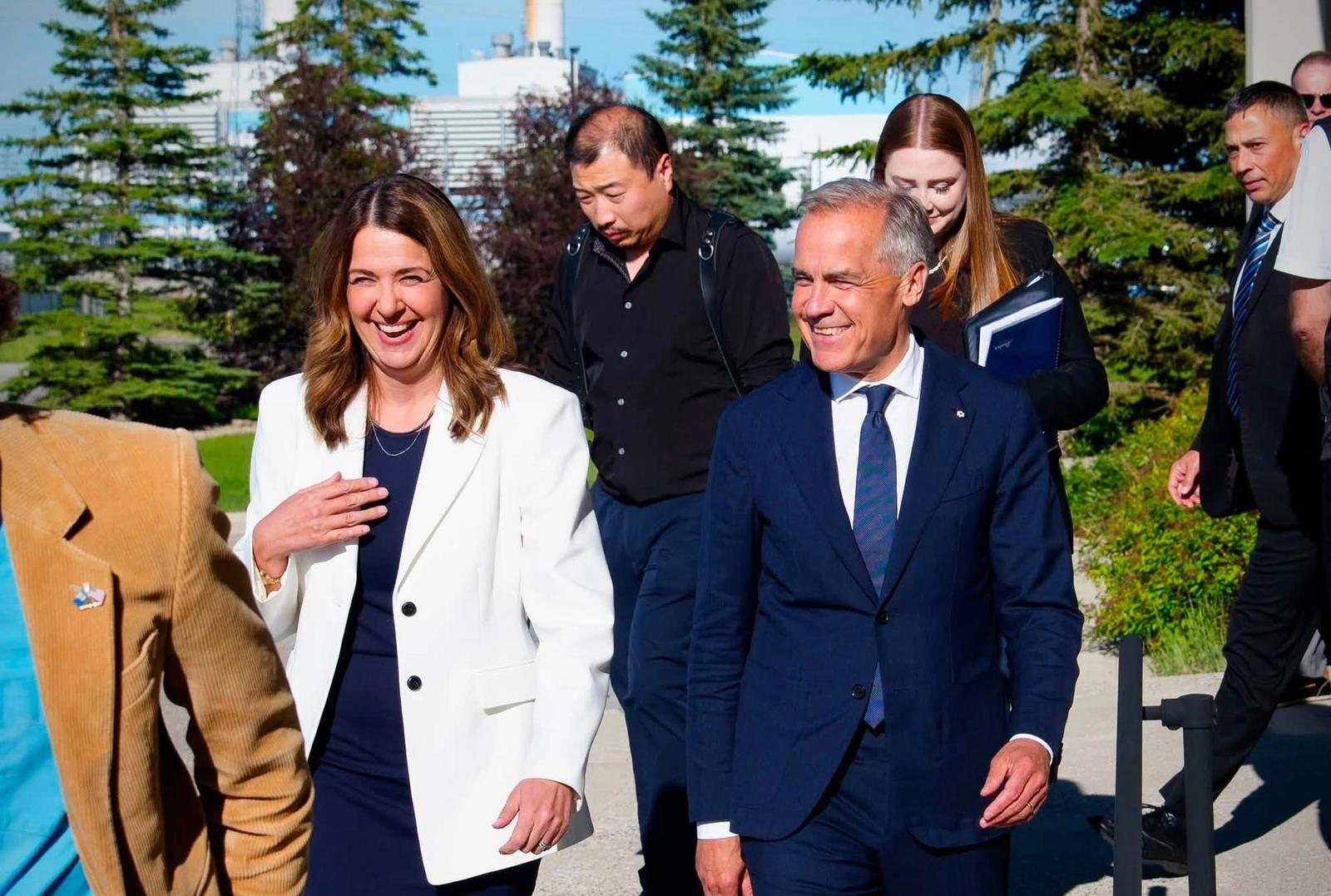
Photo via Mark Carney, Facebook
The Topline
- Prime Minister Mark Carney and Alberta Premier Danielle Smith announced an oil pipeline proposal from Alberta to the Port of Vancouver has been advanced to the Major Projects Office (MPO) for consideration.
- The MPO is a federal government agency created to serve as a single point of contact for fast-tracking major projects and to “move major projects forward faster, responsibly and sustainably.”
- Preliminary estimates for the project are pegged at $70 billion to $81 billion between now and 2038.
- Ottawa's support is tied to construction of the Pathways Project , a privately funded carbon capture and storage network promising 16 million tonnes of annual emissions reductions.
Never miss another side to every story
Sign up for The Level's 5-minute newsletter, 3x per week
Thanks for subscribing!
Check your inbox for an email to confirm you're on the list. If there's no email, check your spam filter just in case, then mark us as 'not spam' so that you never miss an issue.
Switch sides,
back and forth
Everything’s coming up Carney
Ottawa didn't stumble into the southern route by accident. This was a case of everything’s coming up Carney .
For years, Smith was pushing hard for a new oil pipeline to B.C.’s northern coast right up until Carney — standing alongside B.C. Premier David Eby — announced the pesky federal tanker ban was staying put, effectively making that route impossible.
But as it turns out, the Vancouver Fraser Port Authority was already planning to spend billions on its Roberts Bank Terminal 2 (RBT2) expansion — a separate, previously announced container-shipping project — with construction starting in 2027.
Located in Delta, a suburb just south of Vancouver, RBT2 has been over a decade in the making.
That’s where everything fell into place for Carney. He gets credit for announcing $10 billion for RBT2, essentially laying the foundation to build a pipeline terminal on top of the container port expansion, while B.C. avoids juggling two massive construction and environmental review processes in both the north and south at the same time.
Delta makes all kinds of sense, anyway. The new pipeline would follow the route of the existing Trans Mountain Pipeline to Roberts Bank, which can handle VLCCs, the very large crude carriers that make a pipeline project more sustainable at scale.
And whether we like it or not, the industrial footprint at Roberts Bank was going to change anyway, even without the pipeline. Because the disruption is baked in, it’s better to consolidate the changes in one location rather than duplicating them around the province.
Zoom out to the national level and this project has the potential to be, as Energy Minister Tim Hodgson says , “a good investment for Canadian taxpayers.”
Pipelines generate wide-scale national benefits , including jobs, royalties and, perhaps crucially, energy security at a time when Canada’s relationship with the U.S. is fraying.
For Smith, the case is simple: after years of frustration over limited access to ocean trade routes, a federally owned partner in Trans Mountain, along with a private one, Pembina Pipeline, is stepping up to build the infrastructure needed to get oil sands crude to Asian buyers — but at world prices, instead of discounted North American ones.
The case for Eby is a little more complicated, given the government has an interest in protecting the coastline from environmental risks. But in return for playing ball, B.C. gets a small fortune from Carney.
We’re talking a share of the royalties, a role in overseeing the project, plus billions of investment in much-needed infrastructure projects, including RBT2, the Massey Tunnel replacement, North Coast Transmission Line and expansion of the Red Chris Mine. It’s something like $20 billion in federal funding.
But most importantly, Eby gets his wish and the tanker ban on the north coast stays intact. Without it, B.C.’s Coastal First Nations were likely to withdraw their support for any other big projects on the table, potentially sinking Eby politically.
In the case of Carney, what ties it all together is the Pathways Project, a carbon capture and storage system between the federal government, Alberta and five major oil producers, which the prime minister says will cut 16 million tonnes of emissions a year.
The plan for the Pathways Project, as presented on paper, is to make sure the pipeline helps support what is meant to be the biggest carbon capture project in the world to help reduce those emissions overall.
Whether that math actually holds is a separate question. But as policy, this allows Carney to say yes to Alberta — without saying no to the climate file.
Carney’s big win is he ended up finding a way for two provinces and Ottawa to work together. If that continues, Canada could see some serious economic growth for decades to come.
A publicly funded disaster in the making
Every credible climate model says fossil fuel infrastructure needs to be winding down, not scaling up.
Never mind the carbon capture plan. Canada is still planning a massive pipeline that will ship a million barrels of oil per day — at the exact moment the planet is noticeably heating up.
The Pathways Project, a carbon capture and storage system between the federal government, Alberta and the five major oil producers, promises 16 million tonnes of annual emissions reductions. Cool. But that target is now 75 per cent lower than what the industry originally pledged .
More importantly, no one has put a number on the volume of new emissions this pipeline project will facilitate the creation of in the first place.
The ecological case against the expansion of Roberts Bank is old hat by this point. The David Suzuki Foundation, the Georgia Strait Alliance, the Raincoast Conservation Foundation and the Western Canada Wilderness Committee argued in Federal Court last year that RBT2 would destroy the chinook salmon habitat that southern resident killer whales depend on to survive.
Now we’re not only building a bigger container port, we’re also adding an oil tank farm and export terminal meant for the largest crude carriers sailing through the same fragile stretch of the Salish Sea.
This means more vessel traffic, more dredging and increased spill risk in one of the most ecologically sensitive estuaries on the West Coast.
Then there’s the risk to locals. Keep in mind, this isn’t a plan for a remote pipeline terminus in an industrial zone. Roberts Bank sits inside Delta, which is basically Vancouver, in one of the most densely populated areas in the country.
Any increase in tanker traffic, industrial buildout or spill risk lands directly on a suburb that never had any say on any of this to begin with.
Part of Roberts Bank sits inside Tsawwassen First Nation (TFN) treaty lands. The TFN states that it hasn’t been consulted yet on the proposed southern pipeline route — and neither has the Vancouver Fraser Port Authority (which is wild, frankly).
TFN Executive Councillor Valerie Cross said that while the TFN has no position on the proposal yet, “now is the time for the proponents to reach out and connect with us to make sure that they honour our constitutionally protected treaty rights.”
Then there's, y’know, the taxpayers’ money. After more than a year of both Ottawa and Edmonton insisting they'd hold out for a private proponent to fund a pipeline project, no private company has stepped up to foot the bill.
Chris Severson-Baker of the Pembina Institute (no affiliation with Pembina Pipeline) argued that there's no business case. “If there was any kind of reasonable return on investment to be made, a private company or companies would have put up the cash,” he said.
Instead, the federally owned Trans Mountain Corporation and Alberta's own Petroleum Marketing Commission, both of which are funded by taxpayers, will pay roughly 90 per cent of a project estimated at $35 billion to $44 billion, with Pembina Pipeline holding only a 10 per cent stake.
The Trans Mountain expansion itself was originally pegged at $7.4 billion and ended up costing $34 billion. If this project follows a similar trajectory, Canadians, and especially Albertans, are getting stuck with a bum deal.
