


Neil Malik
What's worse for Canadians: High interest rates or high inflation?
What's worse for Canadians: High interest rates or high inflation?
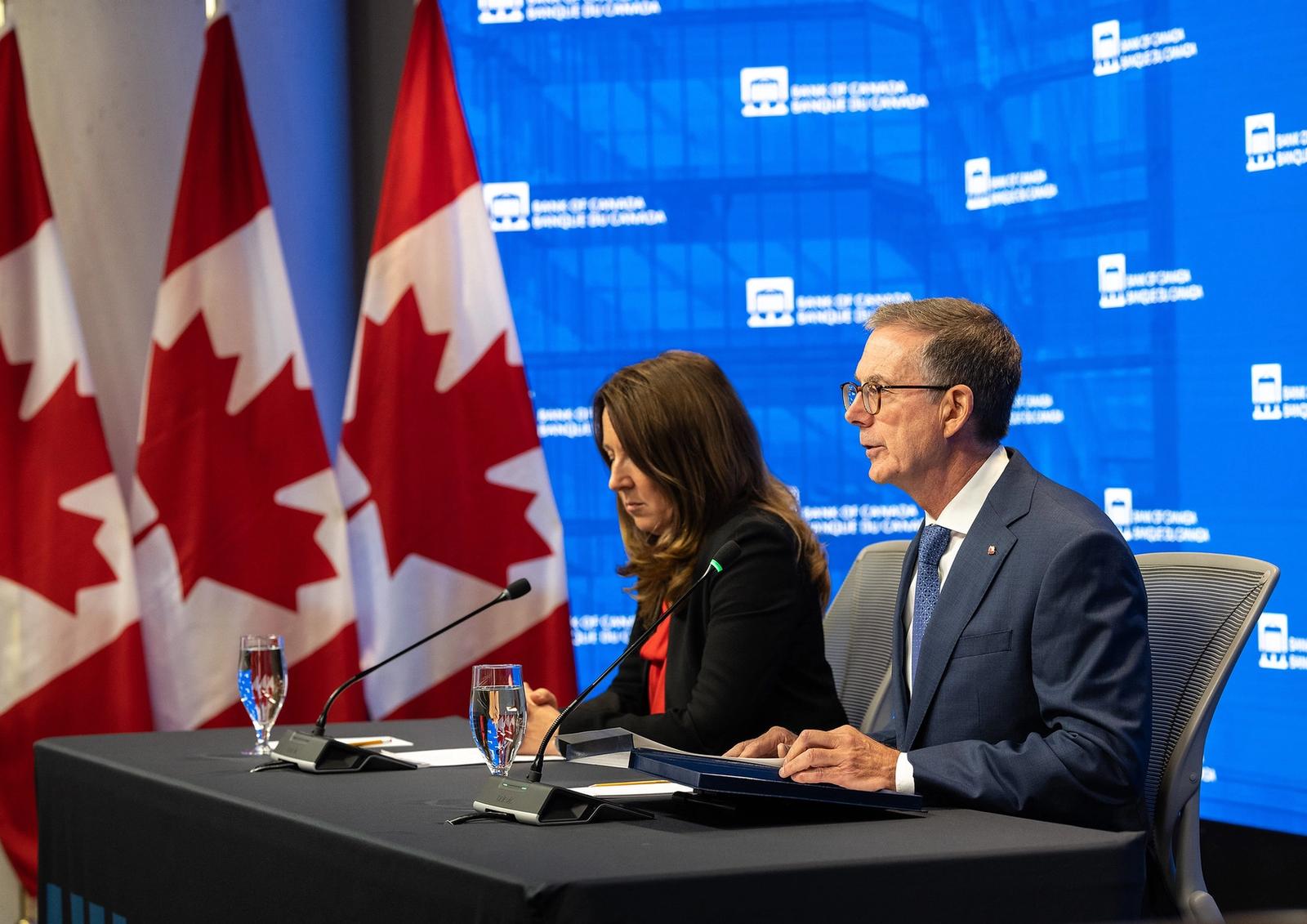
Photo: Bank of Canada
The Topline
- The Bank of Canada raised its benchmark interest rate by a quarter-point to 2.5 per cent on Wednesday, its first increase since 2023.
- The central bank expects inflation to reach approximately 3.5 per cent by the end of 2026 and remain at or above three per cent for much of 2027, before returning close to its two per cent target by mid-2028.
- Bank of Canada governor Tiff Macklem says higher interest rates are needed to prevent energy-driven inflation from spreading to other goods and services.
- The rate hike could increase borrowing costs for Canadians and businesses with variable-rate mortgages and other floating-rate loans.
Never miss another side to every story
Sign up for The Level's 5-minute newsletter, 3x per week
Thanks for subscribing!
Check your inbox for an email to confirm you're on the list. If there's no email, check your spam filter just in case, then mark us as 'not spam' so that you never miss an issue.
Switch sides,
back and forth
Canadians are already paying enough
If global energy prices are the core issue here, then why are Canadians being penalized twice? First with higher fuel prices, and again with higher loan payments?
The central bank admits it can’t do much about the price of oil or end the war in the Middle East, and that it would prefer not to raise borrowing costs for Canadians already struggling with affordability.
Especially since the pain won't be shared equally.
Homeowners with variable-rate mortgages are likely to face higher payments. First-time buyers might find it even harder to enter the housing market.
Mortgage broker Patrick Mulhern told The Level that a quarter-point increase could add roughly $100 a month to payments on a $750,000 mortgage.
Businesses are going to feel it too when financing becomes more expensive. For example, higher borrowing costs could make it harder to upgrade equipment or invest in their operations.
That's a problem when Canada's labour market is already showing weakness. The country lost 68,000 jobs in September, while the new U.S. tariffs are expected to weigh even more on economic growth.
There’s also the fact this is all happening while inflation isn’t actually that bad.
Excluding gasoline, inflation was 2.2 per cent in September, while other measures of core inflation remained close to the bank's two per cent target. That’s well within the normal range.
Economist Pedro Antunes of Signal 49 told CBC News the central bank could have waited longer. He argued that the latest inflation figures didn't yet show broader price pressures beyond oil.
In the meantime, higher borrowing costs won’t do anything to increase global oil supplies or reopen disrupted shipping routes.
The end result is additional pressure on consumers and businesses already dealing with expensive energy, higher debt costs, having less money to spend, and lower demand for goods and services.
Then there’s the housing market which is already struggling as it is. Bank of Canada senior deputy governor Carolyn Rogers expects housing activity to remain subdued over the next two years, particularly in Ontario and British Columbia.
Trying to prevent inflation from spreading is important, no doubt. But is that worth the risk of further weakening an economy that is already under enough strain?
A little pain now could prevent a lot more later
Higher interest rates are painful, especially for Canadians with mortgages and other debt.
On the other hand, inflation hits everyone by lowering the purchasing power of every dollar. Rising prices mean your money doesn't go as far as it used to.
Both scenarios are hardly ideal. But sometimes it’s better to take a bit of pain now to avoid a whole world of hurt later on.
Inflation isn’t a bad thing when it remains steady at roughly two per cent per year — except right now there's good reason to believe the situation is about to get worse.
The Bank of Canada is worried that persistently high energy prices could spread throughout the economy as long as the war in the Middle East keeps pushing up the costs of gasoline, diesel, and heating oil.
That means businesses end up with higher production and transportation expenses, which the central bank expects to be passed down to customers by raising prices.
The frustrating part is raising interest rates won't bring down global oil prices. Instead, Governor Tiff Macklem hopes to prevent higher oil prices from turning into generalized inflation across the board.
As Macklem put it , Canadians are already paying more at the pump. The real danger is having to "pay for it twice" when higher energy costs are passed along through the prices of other products.
Because here’s the big risk. If inflation becomes entrenched, the Bank of Canada might have to raise interest rates much more aggressively — like we saw following the COVID pandemic. But doing a relatively modest rate increase now could reduce the need for more painful measures later.
These decisions aren’t taken lightly. Macklem believes the economy is resilient enough to withstand some tightening. Canada's GDP grew 3.3 per cent in the second quarter, while consumer spending has been solid and exports have strengthened.
He says the policy rate, even at 2.5 per cent, remains low enough that it isn't restraining economic growth.
There’s no question that higher interest rates may hurt some Canadians today. But allowing inflation to spread could leave the entire country paying a bigger price tomorrow.
Do you support journalism that helps Canadians navigate difficult issues with more context and less outrage?
Every dollar goes toward helping Canadians see another side to every story so they can form their own opinion.
