


Neil Malik
Is Carney caving too much to Trump?
Is Carney caving too much to Trump?
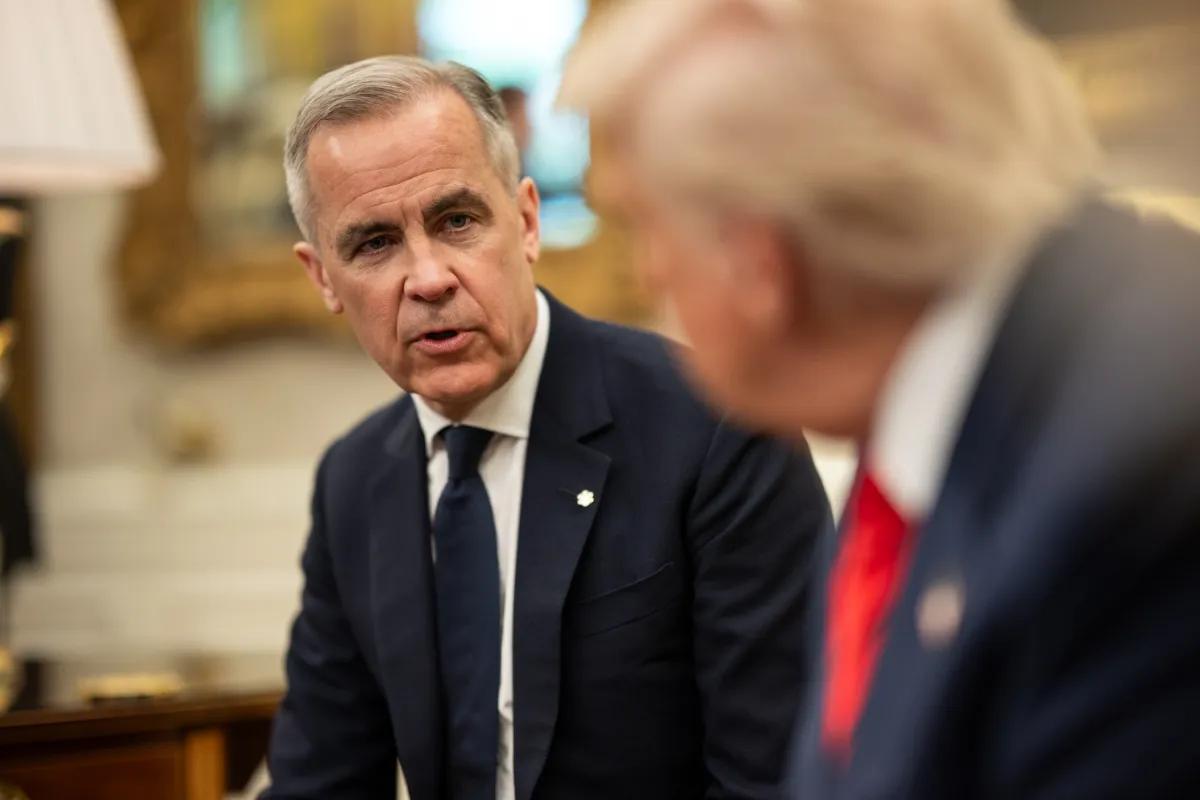
Image: whitehouse.gov
The Topline
- Canada and Michigan, with the support of the U.S. government, have reached an agreement to officially open the Gordie Howe International Bridge on July 27.
- The opening was delayed after U.S. President Donald Trump posted in February on Truth Social “Canada has treated the United States very unfairly for decades” and would not allow the bridge open "until the United States is fully compensated."
- Last month, the Windsor-Detroit Bridge Authority confirmed the bridge opening would be delayed to give both countries “the necessary time to resolve any outstanding issues.”
- The original agreement signed in 2012 said Canada would be responsible for building, financing and operating the new crossing, and that it would be publicly owned jointly by Canada and Michigan.
- With the bridge now scheduled to open, the Cross-Border Institute at the University of Windsor estimates the $6.4-billion bridge will save each truck 20 minutes of travel time, conservatively valued at $1.1 billion to $2.3 billion in time savings per year.
Never miss another side to every story
Sign up for The Level's 5-minute newsletter, 3x per week
Thanks for subscribing!
Check your inbox for an email to confirm you're on the list. If there's no email, check your spam filter just in case, then mark us as 'not spam' so that you never miss an issue.
Switch sides,
back and forth
So much for elbows up
Mark Carney went viral during his campaign for proclaiming “Elbows up” with Mike Myers.
About a year later and now prime minister, Carney told CBC News, “He certainly respects strength,” when describing his approach to Trump.
But that “strength” hasn’t shown up much. Actually, it feels like Carney’s done more backing down than anything else.
In June 2025, he scrapped Canada’s Digital Services Tax on U.S. tech companies after Trump threatened to halt trade talks. Ottawa said it was done “in anticipation of a mutually beneficial comprehensive trade arrangement with the United States” by July 21, 2025.
Not only is there no deal almost a year later, but no formal trade talks are scheduled anytime soon.
Then in August 2025, Carney announced Canada would be “removing all of Canada’s tariffs on U.S. goods specifically covered under CUSMA.” These were meant to be Canada’s retaliatory tariffs on Trump — the one who started the trade war in the first place.
And just last week, Carney yet again surrendered to Trump in order to let the Gordie Howe International Bridge finally open . Canada — which put up the entire construction cost for the bridge — will now split the net profits 50/50 with the U.S.
What exactly are we doing here, folks?
Carney was elected as the guy who could handle Trump and protect our economy. But 16 months later, there is still no trade deal and no sign of one on the horizon
Meanwhile, a KPMG survey of 275 Canadian manufacturing companies found that 42 per cent of firms have either already moved production to the United States or are considering doing so.
KPMG also found that 36 per cent are scaling back capital expenditures, while 12 per cent have paused spending and another nine per cent have cancelled investments altogether.
Bloomberg reports that since Carney was elected, real gross domestic product has shrunk by 0.05 per cent — the worst debut for a Canadian prime minister in at least 63 years.
So if you’ve been feeling lately like we’re no further ahead than a year ago — and actually might be even worse off — you’re not crazy.
Think about what “elbows up” means. Be assertive. Push back. Don’t cave.
It’s more like Carney’s elbows came up a little bit, then quickly went back down to his waist. Do that over and over again while saying “bok bok bok” and you’ve got a chicken.
It’s not weakness, it's strategy
Ever tried to negotiate with a toddler?
Parenting with an iron fist doesn’t work. The key is to pick your battles, know when to be firm and when to give a little, but most importantly, know how to let them feel like they won.
That usually means offering up a small token now — one more minute of Bluey, or one more bite of dessert — so you get the bigger thing you actually wanted all along: agreeing to go to bed without a war.
In the case of Trump — the world's oldest toddler — it means giving him half of something small to begin with in order to open a vital bridge that’s worth a whole lot more.
The original deal had Canada funding the entire project, then collecting all tolls so Canada could recoup its costs.
Out of the blue, Trump decided the agreement was unfair and delayed the bridge’s opening “until the United States is fully compensated for everything we have given them, and also, importantly, Canada treats the United States with the Fairness and Respect that we deserve.”
But Prime Minister Mark Carney didn't cave in. He simply pulled out the toddler parenting playbook. In return for getting the bridge open, he told CTV News Canada will split the “net profits,” adding that “there’s not going to be a lot of net to split.”
By giving up half of whatever's left after covering operating costs and debt repayments — in exchange for opening the bridge to finally improve the flow of trade — Carney's making the best of a situation that nobody could have expected to begin with.
That's always been his game plan. Whether it’s dropping retaliatory tariffs or scrapping the Digital Services Tax, he’s a strategic negotiator who knows when to give up less in order to get more, while simultaneously letting Trump feel like he scored another win.
Nobody wants to sort out a trade deal with the U.S. more than Carney. But it’s not easy when the guy you’re dealing with is all over the map.
When Trump signed CUSMA in 2020, he called it “a truly fair and reciprocal trade deal that will keep jobs, wealth, and growth right here in America.”
Now, he hates the deal and thinks it’s not good enough.
“We don’t need anything that Canada has. We don’t need anything that Mexico has, but they need everything that we have. And they have to treat us better,” Trump told reporters in the Oval Office.
It’s well established by now that nothing Trump signs can be relied on. And that’s ultimately why Canada doesn’t have a trade deal in place — not because Carney has been ineffective.
In the meantime, it’s not like Carney’s just sitting around. He’s putting his efforts into diversifying Canada’s economy away from the U.S. so that we reduce our reliance on it.
He’s pushing closer ties with Europe, China, and Saudi Arabia, while promoting Canadian natural resources as something the world needs — not just something for America to buy at a discount.
Being assertive and not caving sounds great on paper. But in global politics, it’s not always the best approach once you realize who you’re dealing with
It may look weak in the moment. But if it gets Canada the bigger win, that’s not weakness — that’s strategy.
