


Neil Malik
The U.S. and Iran’s sort-of peace deal, explained
The U.S. and Iran’s sort-of peace deal, explained
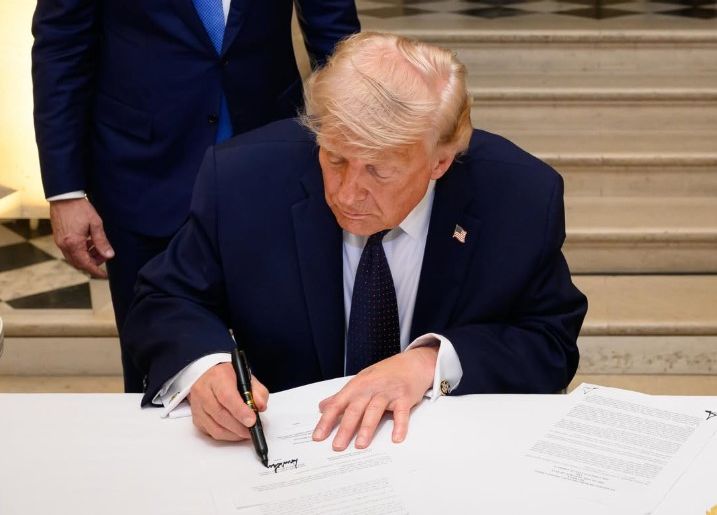
Image: @whitehouse, Instagram
The Topline
- This week, the U.S. and Iran signed a memorandum of understanding (MOU) to cease fire, open the Strait of Hormuz, and establish a 60-day negotiating period to end the Iran war.
- Iran will abandon its efforts to acquire a nuclear weapon, while the U.S. will lift economic sanctions and unfreeze Iran’s assets.
- U.S. President Donald Trump told Axios that Iran’s signing of the MOU “probably is unconditional surrender.”
- Iran’s chief negotiator, Mohammad Bagher Ghalibaf, posted on X that despite efforts by those who sought “to destroy the Iranian nation and force the country into submission,” Iran had taken a major step toward final victory.
- In an interview with CNN, Prime Minister Mark Carney called the agreement a “game changer” and said, “I have to say it’s exceeded my expectations. We’re very pleased with the deal that’s been struck.”
Never miss another side to every story
Sign up for The Level's 5-minute newsletter, 3x per week
Thanks for subscribing!
Check your inbox for an email to confirm you're on the list. If there's no email, check your spam filter just in case, then mark us as 'not spam' so that you never miss an issue.
Switch sides,
back and forth
A pause is not nothing
The first paragraph of the MOU is arguably what matters most.
The U.S., Iran and their allies will declare an “immediate and permanent termination of military operations on all fronts” — including Lebanon.
We can always debate whether this war was necessary to begin with. It’s a solid question.
But since we’re evaluating the MOU, because it effectively grounds the suicide drones, rockets and missiles, civilians can finally breathe a bit easier. That alone makes it worth it.
The agreement also reopens the Strait of Hormuz for the next 60 days. The U.S. will remove its naval blockade on Iranian ports, and Iran will “make arrangements using its best efforts” to allow ships to pass through the Strait of Hormuz without introducing any new tolls or fees.
After that, Iran will negotiate with Oman and the other Gulf states for new arrangements to manage the waterway.
The closure resulted in a spike in gas prices, jet fuel shortages, higher shipping costs, and in some countries, mandatory fuel rationing. So if this MOU holds up for the next 60 days or longer, that should bring some much-needed relief globally.
Moving on, the MOU says Iran will not “procure or develop” nuclear weapons and any enriched uranium in its possession will be dealt with.
Right from the start, one of Trump’s objectives was to prevent Iran from developing a nuclear weapon. Signing this agreement represents the first step toward making that a reality.
There will need to be ongoing compliance checks, though the details haven’t yet been determined. But according to the MOU, if Iran wants the removal of the economic sanctions currently placed on it, it needs to play by the rules and keep its word on nuclear weapons.
Speaking of those sanctions, the U.S. has agreed to remove them, allowing Iran to access the global financial system.
Considering the Iranian currency had collapsed and inflation was extreme before the war began, lifting the sanctions and allowing Iran to sell its oil at least gives the Iranian people a shot at having a better economic future.
The bigger picture: this MOU could be the start of actual cooperation between the U.S. and Iran, signalling the end of a 50-year feud where both countries have never agreed on much of anything except the belief of “violent threats” as the best way to flex dominance over the other.
Hopefully now, after decades of hostility, both countries realize that offering each other a bit of respect and goodwill is far more effective than chasing an endless fight.
The numbers were on his side
Here’s the TL;DR of the agreement: “Just sign something now and we’ll figure it out later.”
This “Great Deal,” as Trump describes it on Truth Social, is hardly a deal. It’s more like the start of a framework of a deal to make a deal later.
For the key issues, the MOU allows for a 60-day negotiating period, but that’s not a hard deadline because it’s “extendable with mutual consent.”
It does solidify a 60-day ceasefire, but nothing beyond that. So there’s no agreement on long-term peace by any means.
Even short-term peace is still questionable. Sure, the agreement says the U.S., Iran “and their allies” agree to the “immediate and permanent termination of military operations on all fronts,” including Lebanon. But there’s no guarantee Israel or Hezbollah goes along with the MOU since they weren’t included in the talks.
Ultimately, the MOU doesn’t resolve much of anything. Instead, it simply kicks the can down the road.
For example, the agreement says Iran must not procure or develop a nuclear weapon, but there’s no plan for how it will dispose of its existing stockpile of enriched uranium.
That’s a significant detail that will be — you guessed it — negotiated later.
Meanwhile, the Strait of Hormuz reopens, but only for 60 days with no certainty on what happens after that.
In the long term, it says Iran is supposed to work with Oman and other Gulf states to set up a “broader” agreement on how to manage the Strait of Hormuz.
But nothing in the MOU prevents Iran from effectively closing it once again or demanding ships pay a toll. In 60 days, we could easily be right back to square one.
The MOU describes the creation of a “definitive, mutually agreed plan” to provide Iran with $300 billion for reconstruction and economic development. Sounds great for Iran in theory, but there are no commitments on where those funds will come from.
Trump’s critics are suggesting the U.S. is on the hook for giving $300 billion to Iran. Trump insists that’s not the case, but without any details, you can’t blame U.S. lawmakers for thinking that way.
Lastly, the U.S. agrees to unfreeze Iran’s assets and lift all economic sanctions that were in place. However, details on how and when that will take place will — say it with me — be negotiated later.
Bigger picture: the Strait of Hormuz is only open temporarily, there’s no firm nuclear deal with Iran, the same Iranian regime is in power — except now without sanctions, Iran still has ballistic missiles, and proxies like Hezbollah are still doing their thing.
On social media, Trump posted , “This Great Deal will bring Peace and Security to the whole Region.”
I’ll believe it when I see it.
