


The Topline
- Widespread anti-government protests against the 47-year-old regime in Iran have been taking place since late December
- For decades, Iranians have been subject to political repression, economic mismanagement, and severe limits on personal freedoms
- Iranian authorities responded to the protests with force, mass arrests, and an internet blackout
- Exact numbers are unknown, but Iran International’s editorial board is reporting that 12,000 people were killed over two days
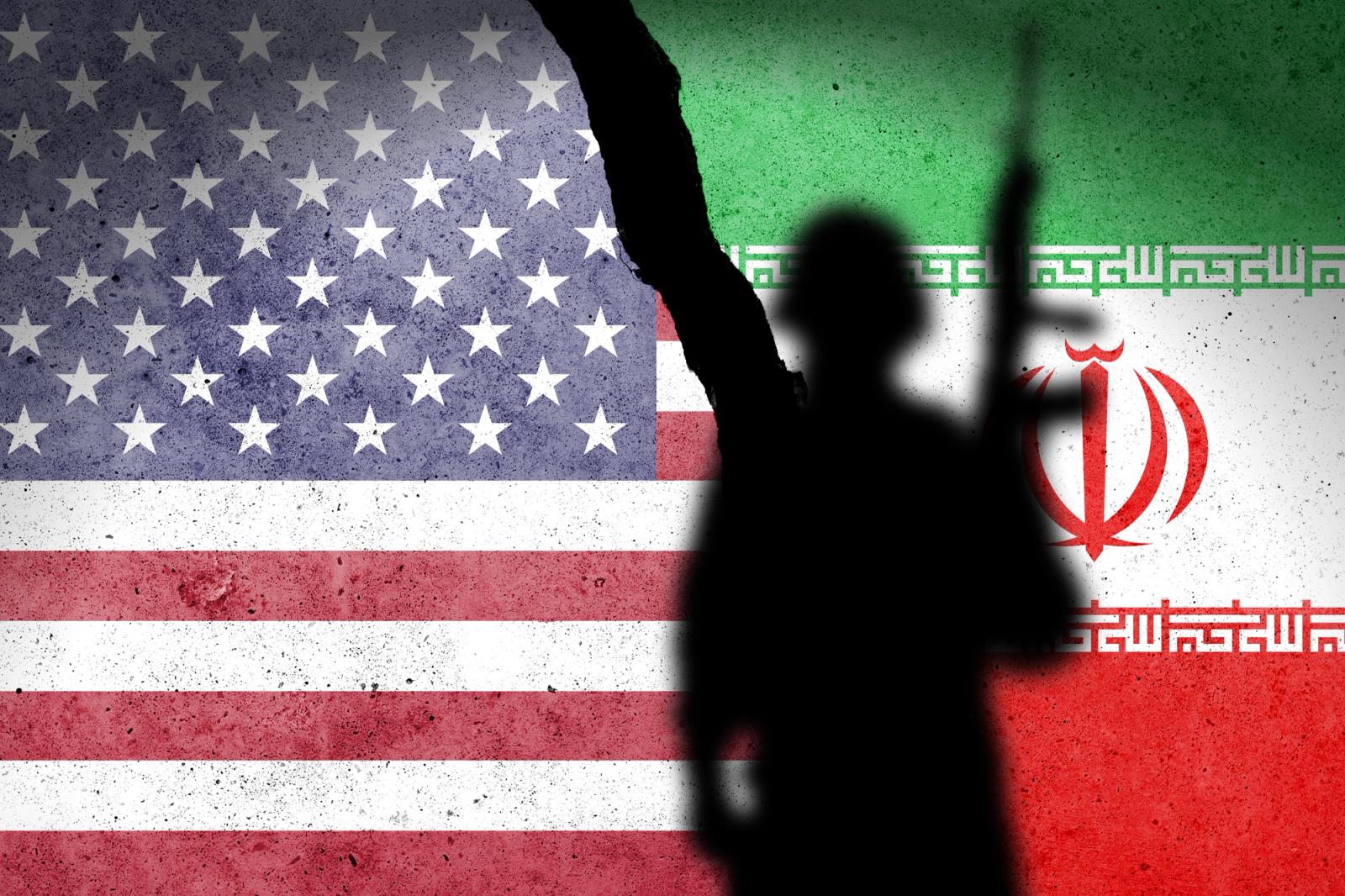
- U.S. President Donald Trump indicated he’s considering an intervention, while Iranian officials have warned that any U.S. involvement would be met with retaliation
Switch sides,
back and forth
Down with the dictator
If there was ever a perfect time to free Iranians from their brutal regime, it’s now. To explain why, let’s back up a bit first.
These protests were sparked by a complete collapse of the economy. Decades of military conflict, corruption, sanctions, and general mismanagement have created an economic dumpster fire.
In December, the Iranian inflation rate was more than 42 per cent. And that’s not a single blip. Iran has only seen inflation rates below 25 per cent in five of the last 16 years.
Iran’s currency, the rial, was valued at around 42,000 rial to the U.S. dollar back in mid-December. Fast forward to mid-January and $1 USD is worth more than 1.1 million rial. Using the same math, that’s like $1 USD going from $1.37 CAD to $34.97 CAD over the same period. Oof.
As a result, Iranians are fed up. The will of the people to throw out their government appears to be stronger than ever. They march with slogans such as "down with the dictator," a reference to Supreme Leader Ayatollah Ali Khamenei.
Negar Mojtahedi, reporter for Iran International, told CKNW’s Mike Smyth the people of Iran want President Trump to intervene because “there [are] no other options for them at this point.”
There’s another reason why now is an opportune time. Things have changed quite a bit for Iran geopolitically.
On top of its war with Hamas, Israel attacked Iran‑backed militia groups , including Hezbollah in Lebanon and the Houthis in Yemen. Iran relied on those groups to demonstrate power outside its borders.
Iran also lost a huge ally in Syria after Bashar al‑Assad’s government was overthrown in 2024, stripping Iran of a friendly regime and key logistics hub.
Then there was Israel’s 12-day bombing campaign on Iran itself, followed by the U.S. dropping more bombs on Iranian nuclear sites.
Added together, this could be Iran’s weakest point in decades – and thus an ideal time for the U.S. to intervene in some manner. It could be military strikes, or other tactics like a cyber attack on government networks.
Mojtahedi added, “I can say with confidence that it is the end of this regime, and now it’s just a question of how many more people are they going to kill on their way out.”
The endgame isn’t clear
Once a U.S. intervention starts, no one can confidently say where it stops. And that’s a significant problem.
Danny Citrinowicz, a senior researcher at Israel’s Institute for National Security Studies, told CNBC an attack “could trigger a much broader escalation.”
Citrinowicz puts it bluntly: “The dilemma is at its peak.” A strong strike might disrupt things in the short term, but it could also motivate the regime and its supporters, giving security forces a rallying point and a common external enemy.
The regime has historically relied on its portrayal of America as the enemy. An American attack strengthens that narrative. What feels like it’s helping the protesters could end up motivating the regime’s supporters.
There’s also the big question of who takes over? Citrinowicz’s answer is not reassuring. “Given the absence of leadership in the opposition, such a strike may achieve an operational success but not a strategic one,” he said.
It could create a scenario where you have a wounded regime that can still kill people, plus a power vacuum no one is ready to fill. Not good at all.
That’s why Israel, Saudi Arabia, the UAE and other Gulf states advised Trump against a U.S. intervention. While they might benefit from a weakened Iranian regime, they don’t want one that collapses without an obvious successor.
Lastly, retaliation is very much a concern. Not only military strikes aimed at U.S. troops in the region, but also economic retaliation that could be problematic for global energy markets.
Take the Strait of Hormuz. It’s the only sea passage from the Persian Gulf to the open ocean. Around a quarter of the world’s seaborne oil and a fifth of liquefied natural gas move through that narrow chokepoint. If Iran decides to threaten or disrupt that flow in response to U.S. strikes, the price could land in the wallets of Canadians at the gas pump.
If the goal is a freer Iran and a more stable Middle East, then a big American military intervention right now is the worst of both worlds: high risk of escalation, low chance of lasting change.
