


Stephen Smysnuik
Is Trump serious about taking Greenland?
Is Trump serious about taking Greenland?
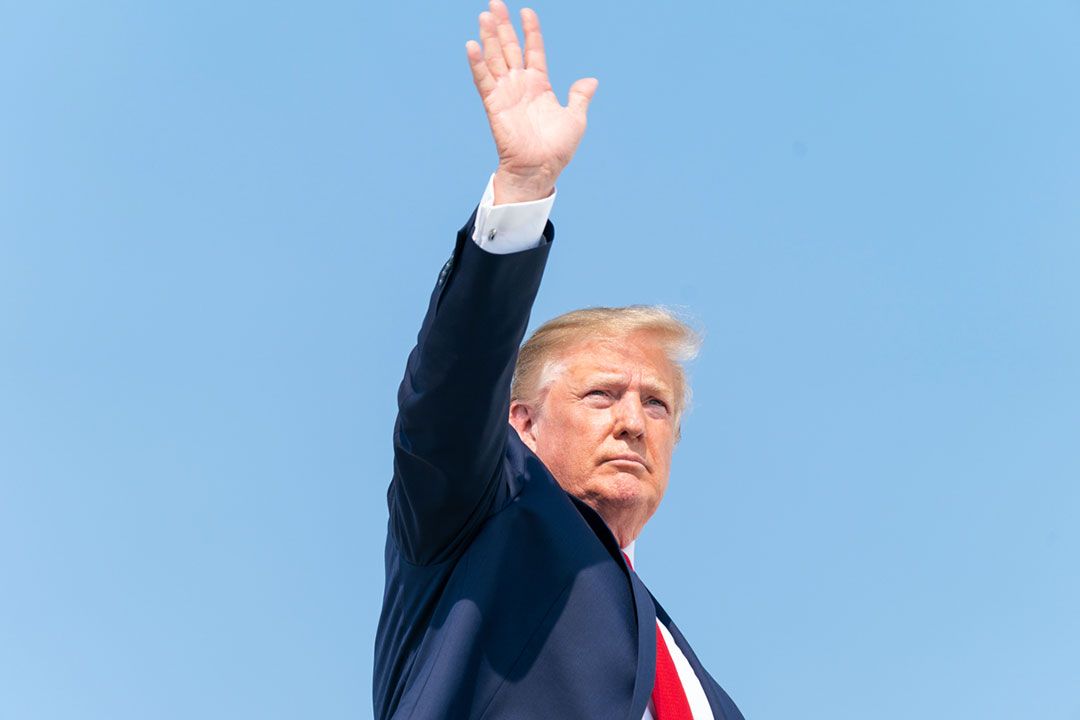
Photo via RawPixel.com
The Topline
- The White House said on Wednesday that buying Greenland is an “active discussion,” and using the U.S. military is “always an option”
- European leaders are publicly supporting Greenland, stating the land “belongs to its people,” and decisions can’t be made without involving Greenland or Denmark.
- Ottawa is treating Trump’s Greenland threats as a NATO problem, not a Denmark problem, with Prime Minister Mark Carney stating that Greenland’s security is included in NATO
Never miss another side to every story
Sign up for The Level's 5-minute newsletter, 3x per week
Thanks for subscribing!
Check your inbox for an email to confirm you're on the list. If there's no email, check your spam filter just in case, then mark us as 'not spam' so that you never miss an issue.
Switch sides,
back and forth
This is a global wake-up call
Donald Trump is using Greenland to assert global dominance. The Arctic has become more strategically important in recent years, as China and Russia move to assert their own dominance on the world stage.
Members of the president’s team, including his homeland security advisor Stephen Miller , have said repeatedly that military force is “ always an option ,” and these threats should be taken seriously. With these comments, the White House is reinforcing Trump’s commitment to a new global order , which he kickstarted with the capture of Nicolas Maduro last weekend.
This is not just a Denmark crisis, either – Canada’s control over the Arctic is very much in question if Greenland is absorbed into the U.S. (For those unaware, Greenland is an autonomous territory of Denmark and shares a 1.2 km border with Canada.)
That’s why Ottawa has been touting its investments in the Arctic lately, including the Arctic Over-the-Horizon Radar project, which is projected to cost over $5 billion. However, delivery on that project is not expected until 2030 at the earliest – and with the way Trump is talking and acting , Canada may not have that long.
In the meantime, the Canadian government is clearly, and rightfully, taking this seriously. Foreign Affairs Minister Anita Anand says she’ll visit Nuuk soon to open a new Canadian consulate, and Governor-General Mary Simon plans to visit in early February. All of this signals that Canada is staying on top of the situation, and tying itself closer to European allies.
Because here’s the thing – if Trump takes Greenland, through invasion or otherwise, Canada is suddenly bordered on three sides by a hostile former ally. As Martin Regg Cohn argues for the Toronto Star, Trump’s path to Canada runs through Greenland.
Eek.
Everyone needs to calm down
Trump’s threats toward Greenland are a frightening rattling of the cage, and a dramatic heel turn for the U.S., but context and reality are important.
First of all, Greenland is tied to Denmark, and Denmark is a NATO ally. Invading territory linked to the U.S. alliance would annihilate the credibility of every U.S. security promise, and cause an unprecedented rupture in military cooperation with the EU.
On top of that, the U.S. already has what it needs in Greenland from a military point of view. The U.S. military operates there under existing agreements, so if the goal is posturing for Arctic supremacy, and keeping in mind the broader military cooperation across Europe, “conquering” does more harm than good. Negotiation is the key.
And, lest we forget, Trump has mastered the art of the deal – remember ? Strategic aggression is paramount in Trump’s view of negotiating; relentless threats and playing hardball are essential to the strategy.
Europe is aligning behind Denmark/Greenland publicly, which makes the path of least resistance for all sides of this drama more likely here – make lots of noise, find some concessions, and avoid a military confrontation.
It’s important to remember that, yes, the Venezuela situation was a bold and widely described as an illegal operation under international law. But Greenland is not Venezuela. Maduro was a pariah internationally, guilty of horrific human rights abuses. There was no friend of the Western allies there to lose.
Denmark, on the other hand, is a friend, part of a much larger and more strategically important ally in the EU, and, it bears repeating, a member of NATO. Invading would blow that partnership to smithereens and ensure a period of global isolation for the U.S. that would likely push its former allies to China , and destroy any leverage the U.S. has for global leadership.
The most plausible outcome isn’t an invasion. It’s permanent pressure — a rolling crisis that extracts attention, headlines, and maybe incremental strategic wins, while everyone else tries to keep NATO from imploding on live television.
